





AI made creating promo videos stupidly easy. You can generate one in 30 minutes now.
But most promos still fail. They get scrolled past, ignored, and sit on your feed collecting dust while your competitors' videos rack up thousands of views.
And it's not because they look bad. Plenty of polished, professional-looking promos get zero engagement.
The problem?
They're missing the fundamentals that actually make people stop scrolling, watch until the end, and take action.
There's a gap between making a promo video and making one that drives results.
And that gap comes down to 10 specific things most creators completely overlook. This post breaks down every single one.
These proven principles work whether you're using AI tools or editing manually.
Want to know the first one?
It happens before you even hit record.
Why promo videos work?
Promo videos do one thing better than any other format. They compress your entire value proposition into 60 seconds of proof.
Think about it…
A product page makes people read and imagine. They have to work to visualize the result. But a promo shows them the transformation happening in real time. They see the product working and the problem getting solved.
And here's why that matters...
People are lazy just like me and everyone else. The video does the imagining for them with zero mental effort.
But there's another reason promos work so well. They create urgency for your launches, limited offers, events with deadlines, and anything else that requires action.
That time pressure triggers something powerful. The fear of missing out while everyone else gets in. Evergreen content like blog posts can’t do that.
So, why are your promo videos still getting ignored?
Creating a promo used to mean hiring someone…
Hiring an agency? Meant you had a budget over $10,000.
A freelancer? Meant you had a smaller budget, but didn’t have the time to make one yourself.
Either way, you waited days or weeks, paid hundreds or thousands, and hoped they understood your vision.
And those who couldn’t afford either skipped making videos entirely because the barrier was too high.
However, the barrier is gone now. How?
Because of AI!
You describe what you want, add your website URL and product images, and get a finished promo in 30 minutes without agencies or freelancers.
But here's what didn't change - the fundamentals of what makes a promo actually work.
The technical barrier is gone, but the strategic one remains. You can generate promos infinitely now, however, if you're ignoring the principles that make people stop and take action, you're just creating more content that gets ignored. The difference between a promo that converts and one that disappears?
It comes down to these 10 things…
10 tips for creating promo videos
#1 What's your one goal? (know it before you create anything)
This is the mistake that kills most promos before they even start. You try cramming everything into one video
- Introduce the product
- Explain features
- Build brand awareness
- And drive sales
The result?
A confused mess that says everything and nothing.
Here's the rule…
One promo = one goal. Not three goals.
Driving clicks to a landing page? That's a different promo than a product launch announcement.
Building event hype? Different than explaining your service.
Each goal needs its own video with its own structure, hook, and CTA.
When you know your single goal, every decision becomes easier…
- What should the hook say?
- What gets them closer to that goal?
- What visuals?
- What supports it?
- The CTA?
The good news is that tools like invideo have workflows that are organized by goals like promos, explainers, ads, and events.
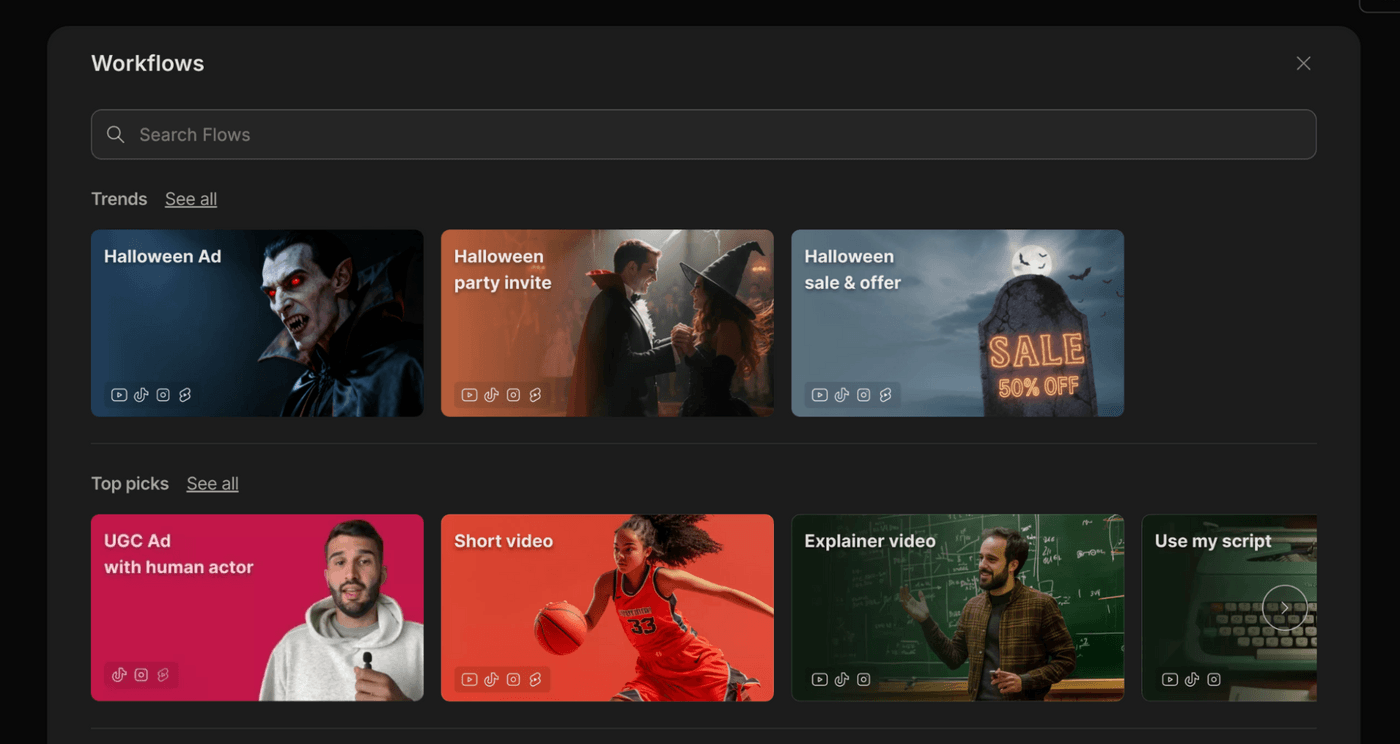
You can set the strategic direction by simply picking a workflow. Then you type in a prompt like "Create a 30-second promo to drive traffic to our product launch page" or "Generate a 60-second ad for free trial sign-ups."
The AI structures everything, including pacing, messaging, and CTA placement around that single objective. You can create multiple promos for multiple goals.
#2: Can you hook them in 3 seconds?
You have three seconds…
Three seconds before someone decides whether to keep watching or scroll to the next video. And most promos waste those precious seconds on logos, slow fade-ins, or generic intros nobody cares about.
Don't start your videos with "Welcome to our company" or your brand animation, start with the payoff they will get from spending their precious minutes watching your video instead of someone else’s.
People’s attention spans are decreasing rapidly. They scroll fast on the web, and their thumb is already moving before your video even loads. The only thing that can stop them is displaying immediate relevance with a hook that makes them think, "wait, this is for me."
Focus on clarity and specificity, don’t try to be clever or creative with your hook.
When prompting your AI tool, specify exactly how you want the video to open: "Start with the biggest customer benefit", "Open by calling out the main problem", or "Begin with the transformation, not the introduction."
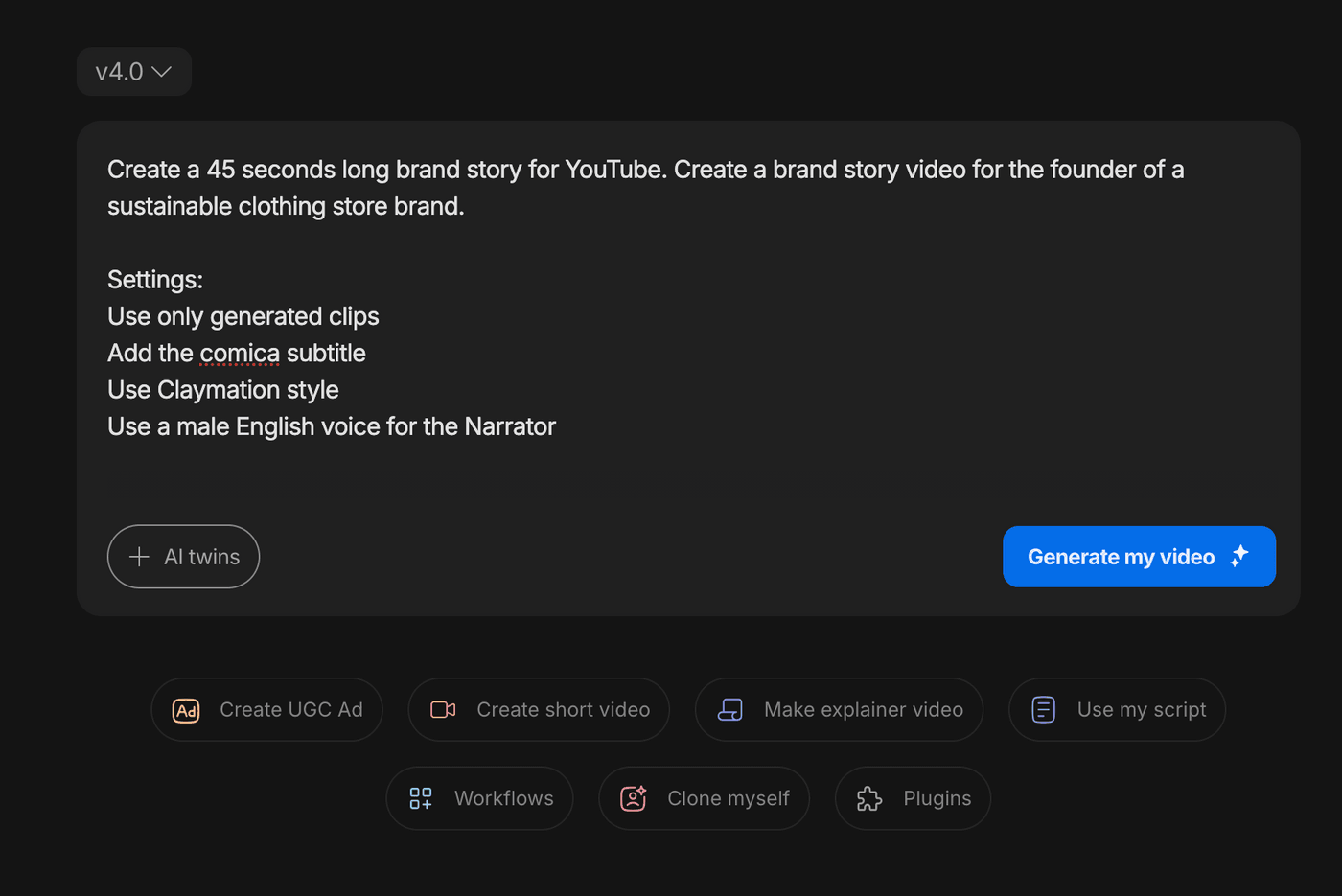
The AI generates your hook based on this direction, pulling from your website content or the context you provide. Don’t hope that AI gets it right, tell it exactly what needs to happen in those critical first three seconds.
#3: Is this about you or about them?
In many promo videos, businesses waste precious seconds and minutes with statements like "We're a leading company with 20 years of experience offering innovative solutions..."
The problem with this?
Nobody cares about you, they care about what they can get from you. They want to know how you can help them get the outcomes they desire.
Your promo needs to show them that transformation, not list your features or credentials. Every moment you make it about you, your story, your awards, your mission statement, you lose them. Keep the focus on what changes for them after they say yes.
When using AI to make your video, add your website URL when prompting and include this instruction: "Focus on customer benefits, not company features."
The AI pulls information from your site but reframes it around outcomes. Instead of regurgitating your "About Us" page, it structures the message around what viewers actually care about. You can also specify in your prompt: "Show how this solves [specific problem]" or "Highlight the transformation customers experience."
#4: Are they watching on mobile? (Design like it)
63% of video content is watched on mobile devices.
And most promos fail on mobile because they were designed for a big screen.
Why? Either because…
- The text is too small to read
- Visuals are too cluttered
- Important details get lost in tiny frames
Your carefully crafted promo becomes an unreadable blur on the device where it actually matters.
If your viewer has to squint to read your text or struggles to see your product clearly, they scroll past your video and watch your competitors’ videos. So include…
- Larger text overlays
- Simpler compositions
- Clear focal points
- One visual element per frame
- Bold, readable fonts
Design your videos for the thumb-scroller watching on a 6-inch screen in bright sunlight with their sound off.
Most AI tools automatically optimize text size, framing, and visual hierarchy for mobile screens when you select your platform format.
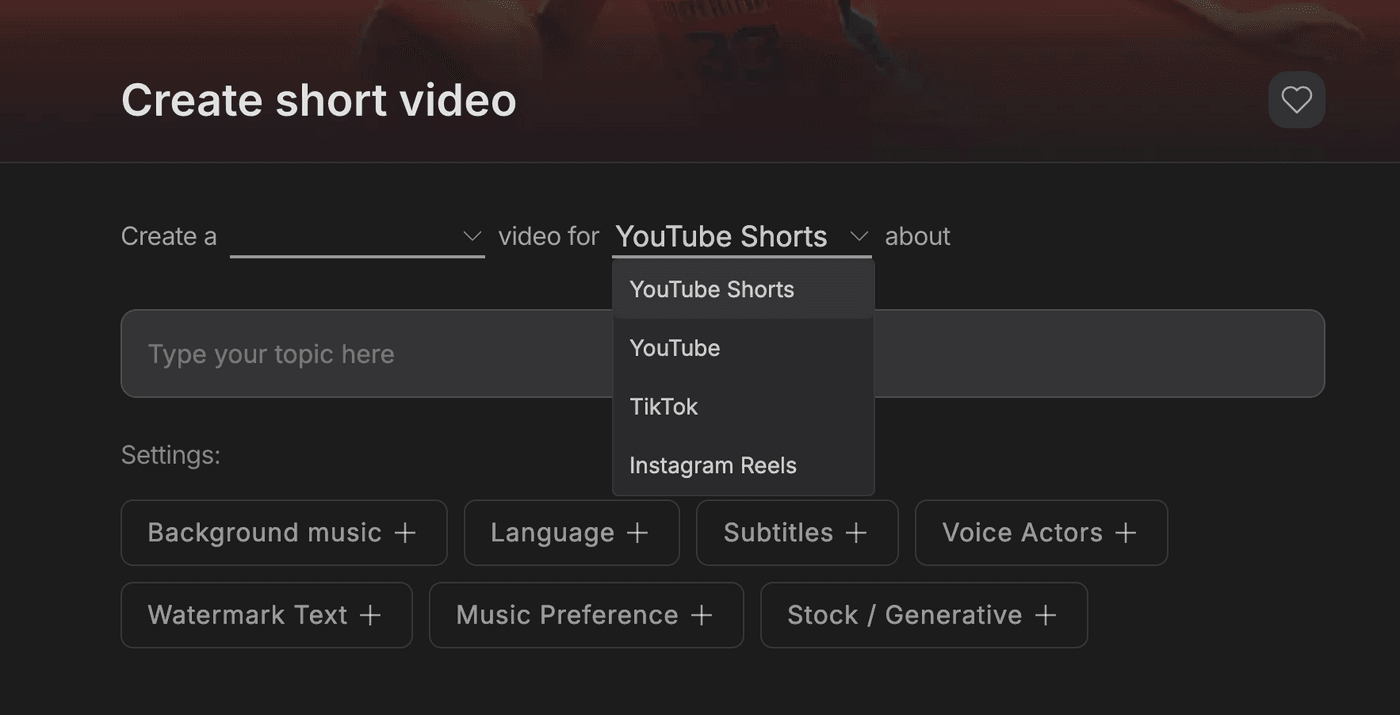
AI understands that vertical videos need different text placement than horizontal ones, and that mobile-first platforms like TikTok and Instagram require larger, bolder visual elements.
In your prompt, you can specify: "Optimize for mobile viewing" or "Ensure all text is readable on small screens."
#5: Are you showing or just telling?
Successful promos don’t just move, they prove. Most promos waste time by talking about what they do instead of showing it. It’s usually someone talking at the camera explaining the benefits while generic stock footage plays behind them.
Instead, you should show the real results with the before and after. Let the visuals do the convincing instead of asking viewers to imagine it while you describe it.
AI tools these days have intelligent asset integration and generative media capabilities that create visual demonstrations automatically.
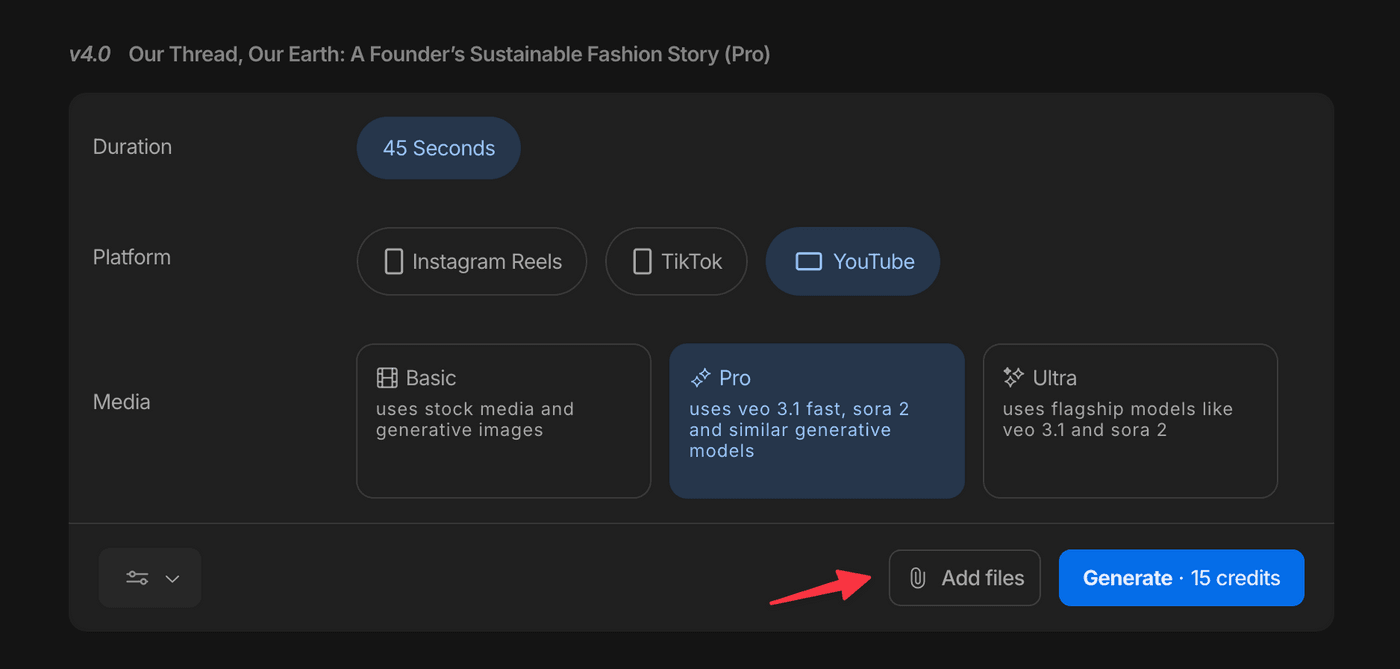
You simply upload your product images, and the AI creates videos of people using them.
You can also include it in your prompt: "Show the product solving [specific problem]" or "Demonstrate the transformation visually," or "Display before and after results."
If you have demo footage or photos of your work, upload them.
The AI weaves them into the narrative, creating visual proof instead of just verbal claims..
#6: What if 75% never hear your video?
75% of people watch videos with the sound off while they're scrolling at work, on the train, or sitting next to someone sleeping.
So if your promo depends on audio to make sense, you've already lost 7 out of 10 viewers. This makes captions essential to being understood. Without them, that script you spent hours perfecting becomes useless.
But here's the flip side…
For the 25% who do have sound on, audio quality matters enormously. Things like…
- Bad voiceover audio
- Jarring music
- Mismatched sound design
…will make your promo feel cheap and unprofessional, even if the visuals are perfect.
You need to win both scenarios….
Silent viewers need captions that carry the full message, and audio-on viewers need clean voiceover and music that enhances without overpowering.
This is pretty easy to set up, as most AI tools auto-generate captions in customizable styles. You just need to make sure you turn it on while creating your video.
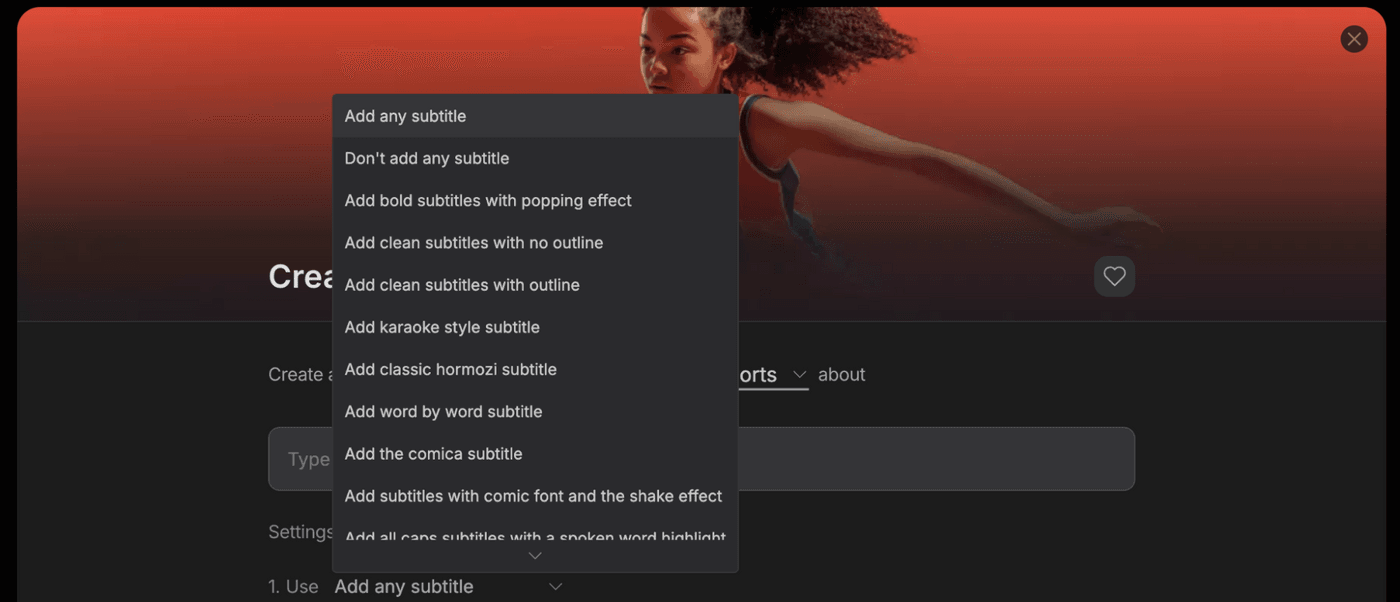
For voiceover, specify tone and style in your prompt: "Warm and trustworthy female voice" or "Energetic and upbeat narration." The AI creates a human-sounding voiceover that matches your brand without you recording anything.
Music selection happens automatically based on the mood you describe, such as "upbeat and energetic" or "calm and professional," and the AI balances levels so the voiceover stays clear.
#7: What action should they take next?
Most creators and businesses nowadays understand the importance of adding a call to action (CTA) to their videos, but they keep them vague with a "Learn more" or worse, just slap in their logo or company name.
What does "learn more" even mean?
This confuses viewers, and they don't convert, because if you make them think about what to do next, they won't do anything.
So, you need a specific and clear call to action. And don’t keep it vague with something like "visit our website, call us, or check out our social."
You need to be more specific with messaging like "Click the link to book your free consultation." "Download the app and get your first month free." "Register at EventName.com before Friday."
The more specific you are, the more the number of people who will follow through.
You can get your AI to include this CTA by mentioning it in the prompt with all the details: "End with a clear call-to-action: Visit CleanHomeNow.com and use code CLEAN20 for 20% off your first order."
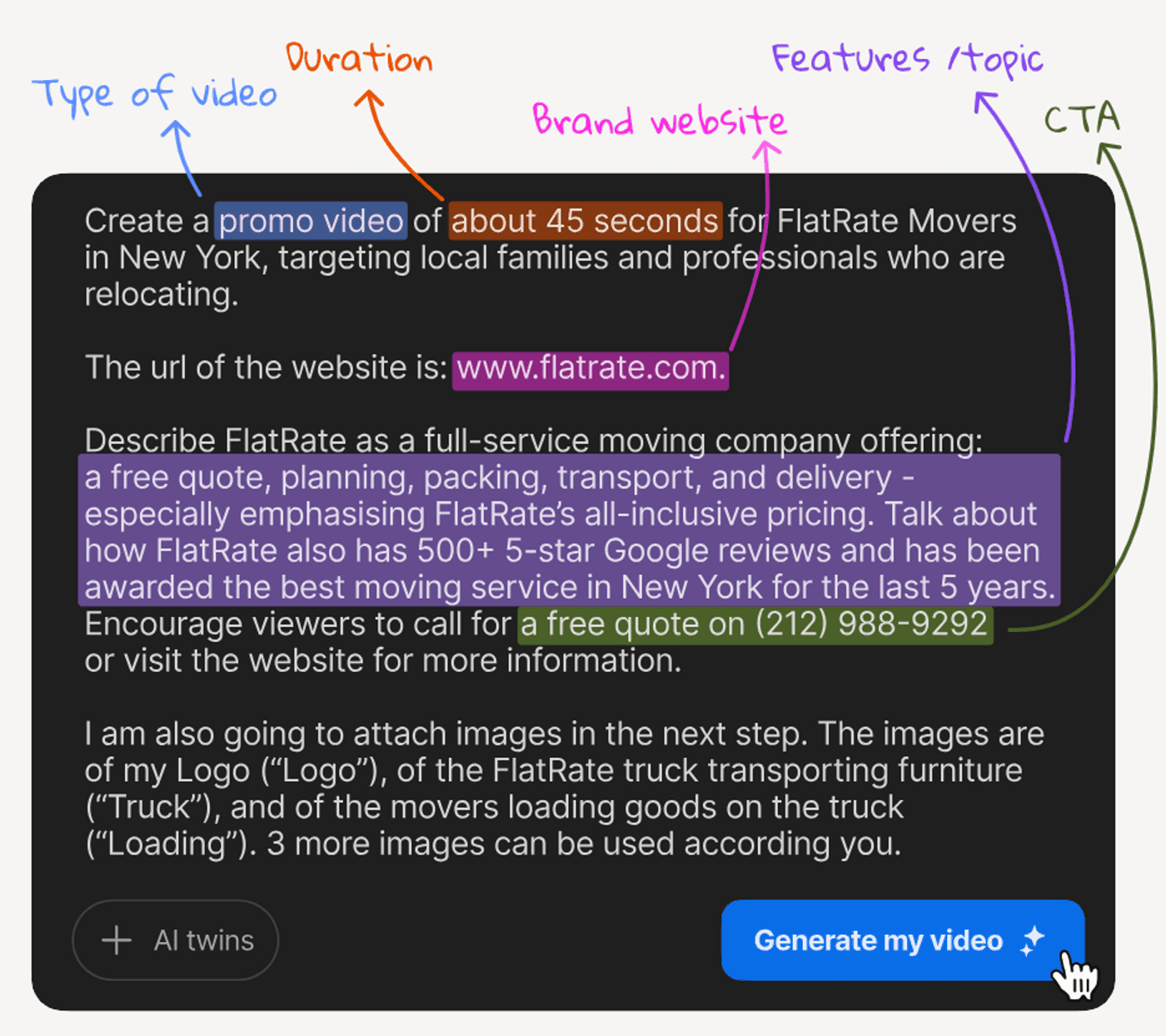
The AI integrates it naturally into the script and creates an end screen that displays the CTA visually with the URL, discount code, and phone number.
#8: Should you put a face in your promo?
Right now, it is easier than ever for your competitors to create imitations of your products because of AI. You could create a successful promo, watch it go viral, and generate tons of sales from it.
But the moment your competitors get a whiff of your success, they will start creating replicas of your products and stealing your customers.
So, what can you do to protect your business?
Build a brand around a real person at your company. If people form a connection with someone at your company and trust them, they will want to buy from this person only and no one else.
However, most people hate being on camera…
- Recording yourself feels awkward
- You mess up takes
- The lighting's wrong
- Your voice sounds weird
This barrier keeps most businesses from using the one thing that would extend their businesses’ longevity.
Fortunately, with AI avatars and voice cloning, you can eliminate the recording barrier completely.
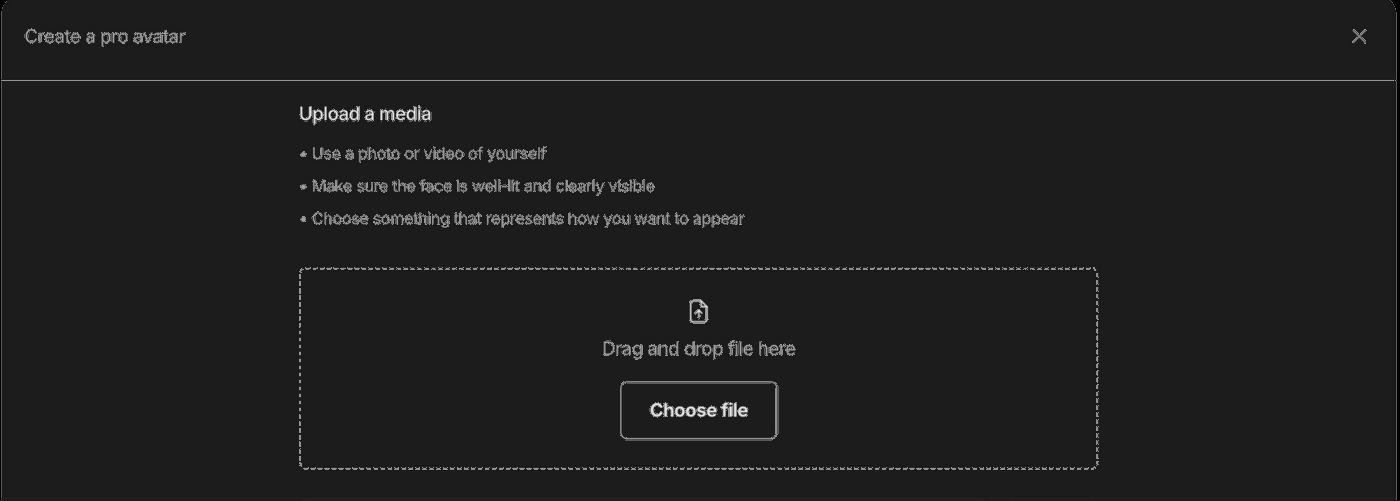
You can upload a 60-second clip of yourself talking, and the AI can create a digital clone that looks and speaks like you without you ever stepping in front of a camera again.
#9: Does your promo match the platform?
A promo that crushes on Instagram Reels will flop on LinkedIn or YouTube.
Why? Because each platform has its own language…
- TikTok moves fast with trending sounds and jump cuts
- LinkedIn breathes slower with professional polish
- Instagram wants aspirational aesthetics
- YouTube wants you to answer questions to searches
Most businesses create one promo and blast it everywhere, and it underperforms everywhere because it wasn't optimized for anywhere. Platform optimization isn't just about aspect ratios, it's also about pacing, tone, music style, text placement, user demographics, and even how quickly you deliver your message.
Creating platform-specific versions used to mean re-editing everything multiple times. Now it doesn't, because thanks to AI, you can create videos for multiple platforms with a single click.
#10: Why create one when you can test five?
The best marketers don't chase perfection, they test variations. Because you never know which hook will stop the scroll, which CTA will drive clicks, or which opening will work until you test it with real people. Your favorite version often isn't the winner.
The one you made in 5 minutes because you had a tight deadline sometimes crushes the one you spent hours perfecting.
So, you need to test everything from hooks, video lengths, thumbnails, subtitles, and aspect ratios to see which combination works best.
Most creators avoid this because creating variations takes as long as creating the original. However, now that barrier is gone because of AI.
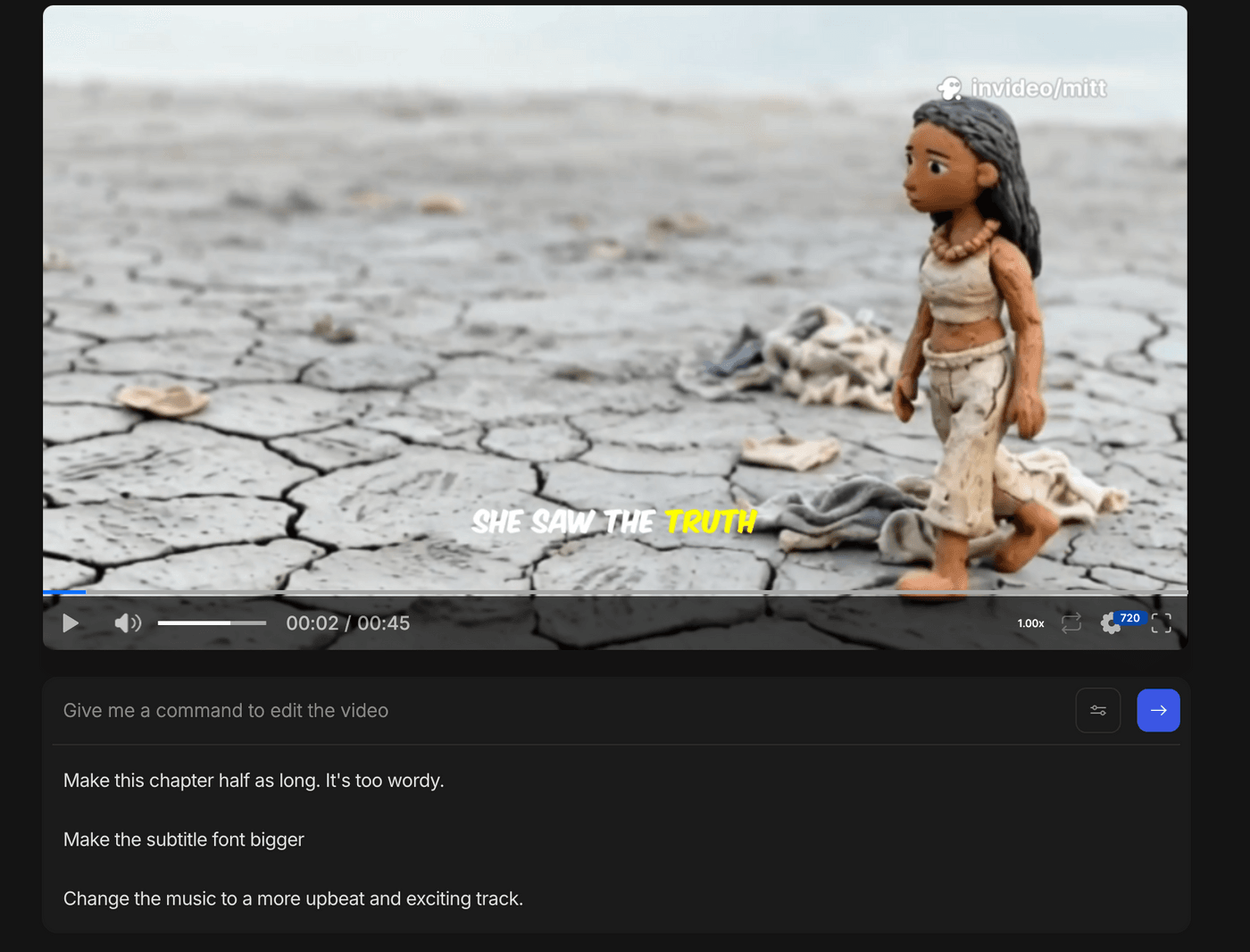
After your video is generated, you can simply tell your AI how to make a new version with text prompts, and it will generate it for you.
The difference between a promo that works and one that gets ignored
Creating promo videos is easy now because AI has solved that problem.
But making promos that actually drive results?
That still requires understanding what makes people stop, watch, and take action.
These 10 principles separate content that converts from content that disappears into the feed. You don't need to perfect all 10 on your first attempt. But the more you implement, the better your promos perform.
Start with one strategy like hooking them fast, making it about them, or designing for mobile, and slowly incorporate the others.
If implementing all these strategies is too overwhelming for you, give invideo a shot. It will help you execute all the above strategies to create a video that follows all the above rules in 30 minutes.
