



Key Takeaways
-
Post Reels when your audience is most active, and let your Insights data guide you.
-
Review your top-performing Reels to spot patterns in days and times that drive engagement.
-
Weekday mornings and early afternoons usually get the best reach.
-
Use weekends to test new formats or content ideas.
-
Keep a steady posting rhythm and high-quality content.
Imagine your social media team spending hours creating a video for Instagram Reels. But instead of trending, it tanks. Before you blame the content, please pause. The problem isn’t always what you post; it’s when you post it.
When it comes to Reels, timing strongly influences your content’s reach and traction. Brands like Nike and Netflix understand this well. They don’t rely on quality content alone. They pair it with precise posting schedules to make sure it hits the right screens.
But here’s the catch: there is no universal “best time” to post Reels on Instagram. It depends on factors like audience, time zone, and algorithms. While studies suggest patterns like weekdays and mid-mornings, your own data matters most.
Here, we’ll share a simple posting schedule you can use right away, along with a step-by-step method to build a custom schedule based on your audience.
What’s more, with invideo, you can create and schedule Reels ahead of time using AI, so timing never holds you back.
Does Posting Time Really Matter for Instagram Reels?
Let’s cut to the chase: yes, posting time matters for Instagram Reels. But not for the reason most people think.
Instagram doesn’t boost Reels just because they are posted at a certain hour. It boosts new Reels that perform well quickly.
Understand this: when a Reel is published, Instagram initially shows it to a small group of followers. If it earns strong engagement early, especially views, watch time, and shares within the first 1 to 2 hours, the platform is more likely to distribute it further. Adam Mosseri, the Head of Instagram, has repeatedly emphasized that watch time and early interaction are key signals for Reels ranking.
This is where timing comes in. Posting when your audience is active increases the chances of early engagement. According to studies, Reels posted during the top 3 best time windows get 19% more views, 15% more likes, and 51% more comments.
Large-scale social media studies show consistent weekday and time-of-day activity patterns across regions, making them a useful starting point. That said, always remember that they are only a baseline. Quality still matters more. At the end of the day, a strong Reel will outperform a poorly made one even if the timing is not perfect.
Global Best Times to Post Reels on Instagram 2026
Struggling to pick a posting time? Use this cheat sheet! It combines overlapping data from several verified sources to give you a few proven windows that work across most accounts worldwide:
Example Weekly Posting Schedule (Local Time)
| Day | Primary window | Secondary window | Notes |
|---|---|---|---|
| Monday | 8:00 am to 10:00 am | 12:00 pm to 2:00 pm | Strong B2B/B2C reset day |
| Tuesday | 9:00 am to 11:00 am | 1:00 pm to 3:00 pm | Consistent midweek performer |
| Wednesday | 8:00 am to 12:00 pm | 6:00 pm to 8:00 pm | Peak engagement day |
| Thursday | 9:00 am to 1:00 pm | 5:00 pm to 7:00 pm | Most reliable overall |
| Friday | 10:00 am to 12:00 pm | 2:00 pm to 4:00 pm | Great for consumer brands |
| Saturday | 10:00 am to 1:00 pm | 6:00 pm to 8:00 pm | Test leisure/creator content |
| Sunday | 11:00 am to 2:00 pm | 6:00 pm to 8:00 pm | Lowest average |
*Post these windows in your audience's local time. For example, use EST if you're US-focused, IST for India, and CET for Europe.
Key takeaways:
-
Weekday mornings and late mornings (roughly 8:00 am to 12:00 pm) tend to show higher activity across most accounts. Lunch and early afternoons also perform steadily.
-
Wednesdays and Thursdays are usually the most reliable days if you want consistent engagement rather than occasional spikes.
-
Reserve weekends for testing. Viewing habits are less consistent, which often leads to weaker engagement.
Why Your “Best Time” Will Differ by Audience and Niche
If you’re just getting started, the table above can be a helpful reference. However, your actual best time to post will almost always be different. Here’s why:
1. Different Audience Habits
People open Instagram when it naturally fits into their routine. Students tend to scroll late at night after classes or study time. Working professionals check in during commutes, lunch breaks, or brief pauses between tasks.
Parents often catch up in the evening once the day winds down. Because every brand speaks to a different audience, there is no single best time that works for everyone.
2. Different Industry Peaks
Timing also depends on what people are thinking about at that moment. Food and restaurant content does better in the mid-afternoon because that’s when people start thinking about meals. Travel, tourism, and entertainment perform well in the evenings or on weekends, when users have time to browse and plan.
B2B and finance content tends to work better on weekdays, especially in the morning and early afternoon, when people are already in work mode.
3. Weekends vs Weekdays
For many accounts, weekdays win because people scroll during work breaks. But that flips for niches like tourism and education, where audiences have more time to watch and engage on weekends. This is exactly why global data should be used as guidance, not a rule. It shows broad patterns, yes. But ultimately, it’s your audience’s routine that actually decides when engagement peaks.
4. Time Zone Differences
If your audience is spread across regions, one posting time won’t suit everyone. For example, a Reel posted in the evening in the US will land late at night in Europe and early morning in India. This is why many brands rely on tools that suggest different posting windows for EST, CET, and IST.
Tips on Finding the Best Time to Post Reels on Instagram for Your Own Account
The most reliable way to find your best posting time? Using your own data! Here’s how you can do that:
Step 1: Check Follower Activity in Instagram Insights
Instagram Insights is the platform’s built-in analytics tool that shows how your content is performing. To access it, open your profile dashboard, tap on the menu (three horizontal lines) on the top right corner, and select “Insights.”
Now, tap on “Total followers” and scroll down to the “Most active times” section. It looks something like this:
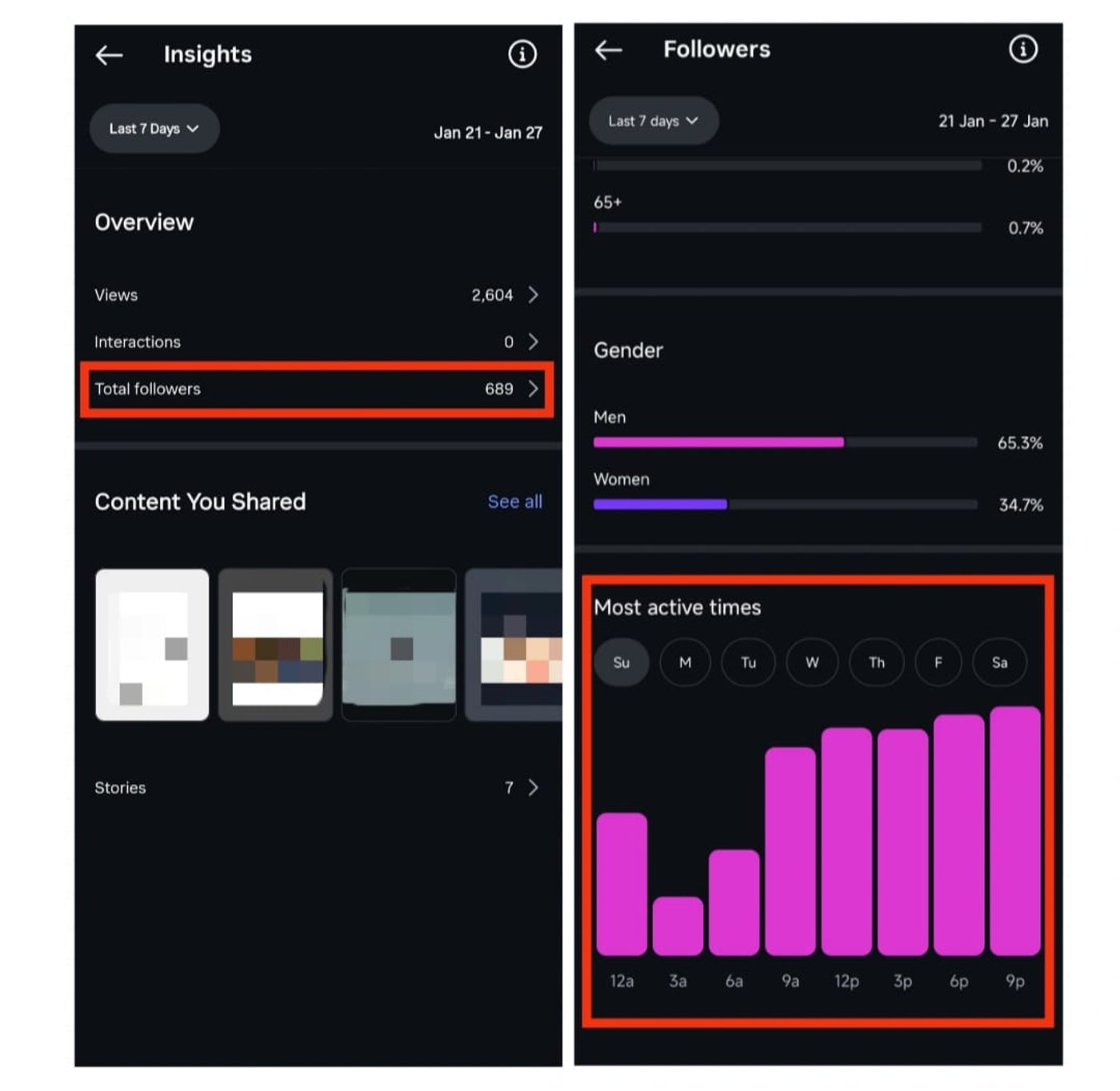
Here, look at both days and hours. This shows when your followers are usually online, not when Instagram says people in general are active. Note the top two or three days and the busiest time ranges.
Step 2: Review Your Top-Performing Reels
Your top Reels reveal when your audience is most engaged. So, open your Reel insights and analyze its data. Go to your profile dashboard, select a Reel from the tab, and tap on “View insights.”
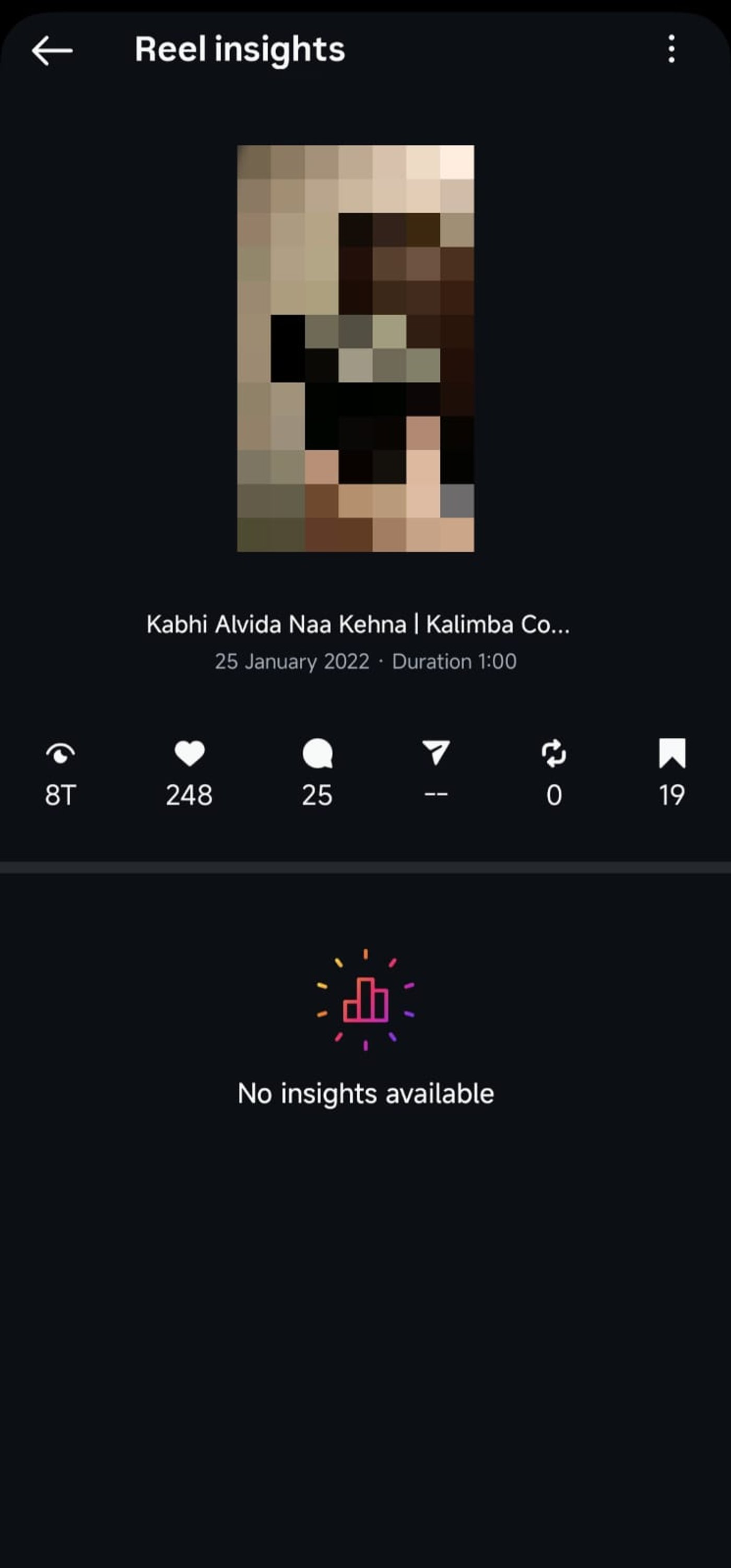
Now, sort each Reel by reach, plays, or engagement and pick the top 10 to 20 videos. Note the day and time each was posted. If certain windows show up repeatedly among your strongest performers, that’s a strong signal that your audience is most responsive at those times.
So, look for times that show strong performance across multiple Reels. These repeated patterns reveal the windows when your audience is reliably active and engaged.
Step 3: Match Performance to Posting Times
Now, compare your top-performing Reels with your follower activity. Look for patterns by day of the week and hour ranges, rather than exact minutes.
For example, multiple strong Reels performing on Tuesday evenings could indicate a reliable posting window.
Step 4: Adjust for Your Audience’s Main Time Zone
Now, locate your audience. If most of them are in one region, schedule posts for their local time. If they are global, consider overlapping windows across key time zones like EST, CET, and IST. Even a one- or two-hour shift can significantly affect early engagement.
Once you identify two or three strong posting windows, stick to them for a few weeks and monitor results. Your audience’s habits evolve, so treat this as an ongoing process rather than a one-time setup.
Sample Schedules by Goal and Audience Type
Different audiences open Instagram at different times of the day. So, posting times only make sense once you factor in who you are creating for.
Here are five common scenarios that give you a clear place to start. If one of these matches your audience, begin there and refine from your experience:
1. If Your Audience Is Mostly Working Professionals
Working professionals tend to scroll in short, predictable pockets. Mornings during commutes, quick lunch breaks, and early evenings are when Instagram fits into their day.
Start with posting between 7:00 am to 9:00 am, 12:00 pm to 2:00 pm, or 6:00 pm to 8:00 pm. Aim for 3 to 4 Reels per week in these windows. For example, a career coach or SaaS brand might upload a quick tip in the morning, a carousel-style Reel at lunch, and save deeper post ideas for early evenings. These times work because people are already in a “quick check” mindset.
2. If Your Audience Is Mostly Students or Gen Z
Students and Gen Z audiences usually come online later. Classes, coaching, or college schedules push most scrolling to the second half of the day.
Test late afternoons and evenings, especially 7:00 pm to 11:00 pm, with occasional late-night experiments for entertainment-heavy Reels. Memes, trends, and fast edits often perform better here. A study creator or lifestyle page, for instance, may see stronger saves and shares after dinner, when people finally slow down and scroll properly.
3. If Your Brand Is B2C or Ecommerce
For ecommerce and consumer brands, timing is closely tied to browsing and buying moods. People explore products when they are relaxed or taking breaks.
Weekday mid-mornings to early afternoons often work well for reach and discovery. Add late morning weekend slots when users casually browse and shop. A clothing or beauty brand might post styling ideas on weekday mornings and save offer-based or product-focused Reels for Saturday or Sunday mornings when users have more time to explore.
4. If You Run a Creator-Led or Entertainment-Focused Account
If your content is personality-driven, relatable, or made to be binge-watched, evenings usually work best. People are more relaxed after the day is done and more open to watching longer Reels, commenting, and sharing.
Start with posting between 6:00 pm and 10:00 pm on weekdays. Weekends can also work well here, especially late evenings, since users have more free time to scroll without rushing.
5. If You Are in a Local or Single-Time Zone Market
If your audience is concentrated in one region, consistency matters more than testing every possible hour. Pick one or two daily windows and stick to them.
For example, a local café or gym posting daily at 9 am and 6 pm trains followers to expect content at those times. Over time, this builds habit-based engagement. Instead of chasing global trends, you are aligning with your audience’s daily routine.
With invideo AI, you can quickly create variations from a single concept and align each one with the right time window, without spending hours editing. This makes audience-specific timing realistic even if you are a solo creator or a small team.
How Often Should You Post Reels on Instagram?
Posting at the right time means little if you are not consistent. Research backs this up. Creators who post regularly see over 5x more engagement per post than those who post occasionally. But the real question is, what’s the sweet spot for posting to stay consistent without overdoing it?
Well, studies suggest that posting at least 3 to 5 Reels a week does the job. It gives the Instagram algorithms enough signals to understand your content and test it with the right audience. More importantly, it also creates consistency without forcing daily posting, making it easier to maintain quality over time.
But it doesn’t end there; here are a few other things you should keep in mind:
1. Prioritize Quality over Volume: Posting more does not automatically mean better results. Adam Mosseri has made it clear that quality matters more than frequency. If a Reel does not hold attention, posting it more often will not help. Fewer high-quality Reels with strong watch time will always perform better than frequent low-effort ones.
2. Stick to 1 or 2 Fixed Posting Windows: Instead of posting at random times, choose one or two daily windows where your audience is most active and rotate your Reels within those slots. This increases the chances of early engagement and also builds expectations. Over time, your audience starts checking your content around those hours.
3. Space Out Your Posts: Instagram advises against posting Reels back-to-back. Each Reel needs time to earn views, watch time, and interactions before the next one goes live. Spacing posts out helps each Reel get its own distribution push instead of competing with your own content.
For most creators and small teams, maintaining a steady posting rhythm can be exhausting. invideo AI eases it by helping you create Reels faster with less manual editing, so you can post consistently and hit your best timing every week!
Putting Time, Content, and Workflow Together
Getting your Reels to perform well is not about finding one perfect posting hour and sticking to it forever. It is about understanding when your audience is most active, posting consistently in those windows, and backing that timing with content that holds attention.
Use global schedules to start smart, refine them with your own Insights, and keep testing as your audience grows. When timing, frequency, and content quality work together, performance becomes predictable instead of hit or miss.
Invideo makes it easy to create, edit, and store your Reels in advance, and then publish exactly when your audience is most active.
Sign up today and take the guesswork out of timing!
Frequently Asked Questions (FAQs):
1. Is it better to post Reels on Instagram in the morning or at night?
It depends on when your audience is most active. For many accounts, mornings work well for reaching people before work or school, while nights perform better when users are relaxed and scrolling longer. The best approach is to test both time slots, track reach and engagement, and stick to the time that consistently brings stronger results for your audience.
2. Is it okay to post Instagram Reels on weekends, or should I focus on weekdays?
Both weekends and weekdays can work for Instagram Reels if you post the right content. Weekdays usually perform well for educational, business, and routine-based content because people scroll during breaks. Weekends often work better for entertainment, lifestyle, and shopping content when users have more free time.
3. How many Instagram Reels should I post per week for growth?
Ideally, you should aim to post at least 3 to 5 Reels per week. It’s usually the “sweet spot” for achieving substantial reach. However, make it a point to be consistent if you want to see noticeable growth and traction.
4. Does posting reels on Instagram at the “wrong” time hurt my account long-term?
No, posting at the wrong time doesn’t hurt your account long-term. It may limit the initial reach of that specific Reel, but it does not negatively impact your future posts or overall growth.
5. What is the best time to post Reels on Instagram if my audience is in a different time zone?
Check Instagram Insights to see when your followers are most active, then schedule Reels to go live during those peak hours in their local time. If your audience is spread across time zones, test a few overlapping windows and stick with the one that consistently drives better early engagement.
