





Key Takeaways:
-
VFX House turns product images into professional ads by generating polished scenes from just visuals and prompts.
-
Concept ads from Spotify, Starbucks, Casa Nacho, CurioCreme, and Dreo show how clear prompts create cinematic, engaging videos.
-
A/B testing small prompt tweaks helps optimize hook rates, immersion, and audience retention.
-
Controlling scene flow, pacing, and subtle movements ensures every video feels dynamic, engaging, and scroll-stopping.
Have you ever seen your brand’s product page and gone “wow!” only to see the ad next and go “what?!” You’re not alone. 43% of marketers find it challenging to consistently create such high-quality visual content, thanks to the amount of time, technology, and manual labor it demands.
But what if you could simply take those picture-perfect visuals, wave a wand, and turn them into scroll-stopping ads? Well, now you can!
With VFX House on invideo, you can now craft eye-catching product ads and videos for TikTok, Instagram, YouTube, and Facebook. Just upload your product visuals, define how you want the ad to look, and watch the magic unfold. Full control, zero effort.
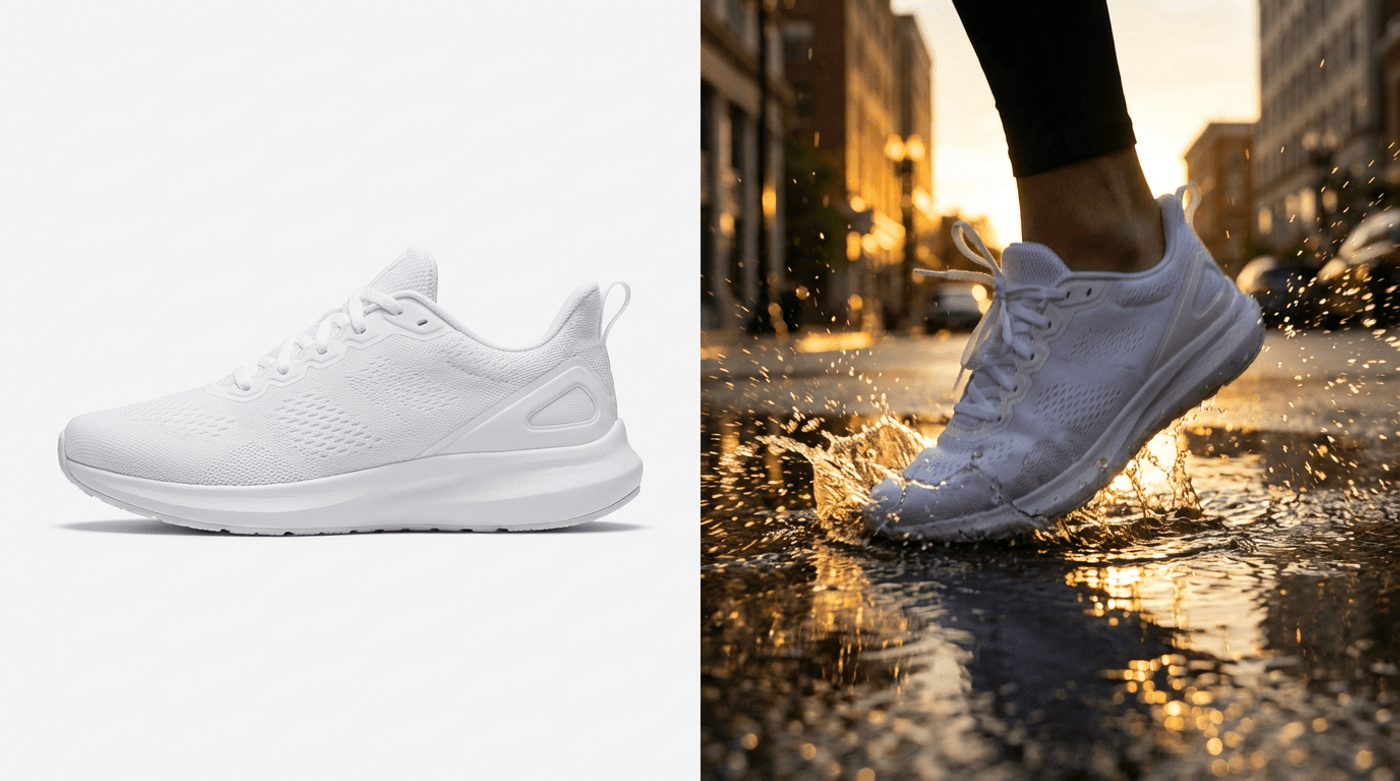
Table of Contents:
1. Why Kling on invideo is Great for Creating Product Ads
2. 5 Examples of AI-Generated Ads for Popular Brands (And How You Can Do It with Kling)
3. Tips to Nail Cadence and Make Your Ads Hit Hard
4. Conclusion
5. Frequently Asked Questions (FAQs)
Why Kling on invideo is Great for Creating Product Ads
Creating a high-quality product advertisement from scratch takes weeks. But Kling on invideo has a trump card: VFX House. Powered by Kling O1, it turns ad creation into a matter of minutes. Here’s how:
-
Product-Aware Prompting: Kling O1 understands textures, shapes, colors, and context. A product image created with an AI image generator is enough for VFX House to generate scenes that feel natural and polished. This saves time while giving your ads a professional look.
-
Motion and Transitions from Prompts: Simply describe how you want the camera to move, whether in pans, pull-ins, or reveal shots, and Kling O1 executes. The results look smooth and intentional, giving a polished flow to every scene.
-
Pacing and Scene Flow: As per research, over 80% of ads fail to maintain audience engagement. To address this issue, Kling O1 responds to cues about how fast or slow scenes should feel. You can break down the ad into segments with different energy levels, maintaining attention and engagement.
-
Consistent Lighting and Style: From shadows to color tones, Kling O1 keeps all elements visually cohesive. This helps viewers focus on the product without distractions and builds trust in the brand experience.
-
Mobile-First Framing: Specify the aspect ratio once, vertical, square, or horizontal, and Kling O1 frames the scene accordingly, leaving space for text and overlays. This ensures your ad works perfectly on Reels, Shorts, TikTok, or YouTube.
5 Examples of AI-Generated Ads for Popular Brands (And How You Can Do It with VFX House)
Want to see how AI can level up your product ads? Here are five concept videos inspired by brands you already know, and how you can use VFX House to create similar high-impact ads using prompts and your existing brand assets.
Quick note: these aren’t real campaigns from Spotify, Starbucks, or any other brand. They’re just demos to show what’s possible when you mix brand cues with AI.
-
1.The Spotify Brand Ad
This AI-generated Spotify concept takes a simple listener page and brings it to life in a series of dynamic, music-inspired scenes. One woman walks down the street, hits play, and with every click, the world behind her changes while she stays locked in the exact same spot in frame. That choice makes every transition feel seamless and powerful.
Why The Prompt Works So Well
The character acts as the anchor, and the worlds do the heavy lifting. Because she never leaves her spot in frame, the viewer immediately understands that the music is what changes the environment. The scenes feel rich and three-dimensional because the worlds are described with depth cues: smoke, crowds, lights, chandeliers, lamps, and sky.
This structure also adapts nicely to vertical. You can simply ask for “9:16 vertical framing, character centered with space at the top and bottom for text overlays,” and you have the same concept ready for Reels, Shorts, and TikTok. Seasonal touches are also easy to layer in.
For example, you can replace one of the worlds with a festive setting or add fireworks to the fusion sequence.
How Can You A/B Test Variations?
You do not need completely different scripts to experiment. Two small changes already give you useful A/B angles:
How You Can Borrow This Pattern
If your product page already shows a single user or hero product, you can use the same structure to generate a similar ad using VFX House:
-
Treat your user or product as the fixed anchor in the frame.
-
Think of three to six “worlds” or scenarios that represent different ways people use your product.
-
Describe how the background, lighting, and styling change while the subject stays put.
-
Add a short line about the format, like “9:16 vertical, safe space for text at the top,” so the output suits the platform you care about.
This turns a simple idea into something that feels big and cinematic without making the prompt harder to manage.
-
-
2.The Casa Nacho Brand Ad
This Casa Nacho prompt takes a basic snack product page and builds an entire table scene around it. Instead of just showing chips in a bag, the ad focuses on the feeling of sitting at a warm, noisy, shared table.
Why This Prompt Works So Well
The story moves from detail to context. The viewer first sees the food up close and understands how good it looks and feels, and then sees who it is for and where it fits. Because the cinematography is described clearly (dolly-ins, overhead shots, macro close-ups, crane reveals), Kling O1 knows when to stay close and when to pull back.
This idea also translates smoothly to mobile. A small addition, such as “vertical 9:16 framing with the food centered and room for text at the top,” is enough to keep the energy, just adapted to a phone screen.
How Can You A/B Test Variations?
You can frame the same footage in slightly different ways:
How You Can Borrow This Pattern
If your product page already has a main product shot and a “who it is for” angle, you can think of your video in two passes and generate a similar output using VFX House:
-
First pass: list three or four details you want to show up close (texture, color, steam, movement).
-
Second pass: describe where and with whom the product is enjoyed.
-
Then, ask for camera moves that naturally connect those two: starting tight, moving wider, and ending on a clear hero shot with your logo and a short line of copy.
This helps create emotional connection through sensory details first, then social context, with smooth camera progression maximizing retention.
-
-
3.The CurioCreme Ice Cream Ad
For CurioCreme, a Perplexity-inspired ice cream flavor, the prompt turns a simple tub into the center of a fantasy park. Instead of a static packshot, the video walks through a world made from the ingredients themselves and the idea of “curious discovery” that Perplexity is known for.
Why This Prompt Works So Well
The park does not just look pretty. It also reflects what the flavor is made of and subtly nods to Perplexity’s “explore and discover” vibe by turning each ingredient into a place to wander through. Each part of the world corresponds to a real element from the product, which grounds the fantasy and makes it feel connected rather than random.
Because the camera moves are described clearly (flying over, swooping in, then settling on the pack), the sequence has a natural rhythm. It feels like a guided tour through a world of information and flavor that lands on the product at the exact right moment.
For short-form, you can easily ask for a vertical cut by specifying “9:16 framing, focus on the tub in the final seconds with the park blurred softly behind it.”
How Can You A/B Test Variations?
Small tweaks to the opening and pacing create smart test variants for food ads:
Your Turn: How You Can Borrow This Pattern
If your product page lists flavor notes, ingredients, or key features, you already have the building blocks. With VFX House, here’s what you can do to generate your ad:
-
Turn each note into a location, object, or ride in a small “world” around your product.
-
Decide how the viewer travels through that world: flying over, walking through, or watching from a distance.
-
Make sure the video lands clearly on the real product at the end, so the fantasy leads somewhere concrete.
This approach works especially well for products where imagination and emotion matter, such as food, beauty, or lifestyle items.
-
-
4.The Starbucks Frappuccino Ad
The Starbucks Strato Frappuccino prompt reads like a shot list from a brand video. It takes a product page focused on a single beverage and turns it into a layered story about craft, texture, and the moment of enjoying it.
Why This Prompt Works So Well
The video tells a simple story: how the drink is made, how it looks, and how it feels to enjoy it. The macro shots highlight the craft and texture. The lifestyle shots show who it is for. The final line-up reinforces choice and variety.
Because the script specifies camera types (macro, medium, wide) and typography style (script for descriptors, serif for claims), Kling O1 can keep the visual language consistent from start to finish. That makes the ad feel polished instead of random.
This structure also adapts well to vertical formats. You can ask for “9:16 framing with the cup centered and room for text above and below,” while keeping the same sequence.
How Can You A/B Test Variations?
Even within this structure, you have room to explore:
Your Turn: How You Can Borrow This Pattern
If your product page already includes a “how it is made” section and a “who it is for” section, you can generate a similar ad using VFX House by doing the following:
-
Map your process into three or four simple steps and assign each step a macro or medium shot.
-
Follow that with one or two lifestyle scenes showing the product in use.
-
Close with a clear hero frame that repeats the name and, if relevant, a limited-time or multi-flavor message.
You do not need complex dialogue. A combination of text on screen, a clear sequence, and music can often say enough.
-
-
5.The Dreo Automobile Ad
This Dreo ad takes a retro blue compact car and puts it through hilarious parking-lot chaos from an upset girlfriend, then shifts to smooth road proof. The stress test builds laughs through exaggerated mishaps, resolved by calm performance shots in natural light with SFX-only audio. The contrast makes the car feel both tough and stylish.
Why The Prompt Works So Well
The chaos centers on believable real-world stresses without ever losing sight of the hero: the car itself. Clean, polished driving shots in consistent daylight act as visual proof that it still performs perfectly after the drama. The before/after rhythm keeps the hook emotional while ending on clear product trust.
Vertical adaptation is straightforward by asking for “9:16 framing, car centered on a stable horizon, safe space for text at the top and bottom.” Seasonal tweaks, such as holiday lights reflecting on wet asphalt or a soft drizzle in the lot, help the same idea run longer without creative fatigue.
How Can You A/B Test Variations?
Simple timing shifts give you clear performance vs humor tests:
Your Turn: How You Can Borrow This Pattern
If your product page already hints at “what can go wrong” and “how it still holds up,” you can think of your video in two passes and leave the rest to VFX House:
-
First pass: list three or four everyday stress moments around your product (spills, drops, bumps, overloading, awkward usage) that you can safely exaggerate.
-
Second pass: describe the calm proof shots that follow (steady motion, close-ups of intact parts, wide shots that feel controlled and confident).
-
Then, ask for camera moves that connect those phases: start in tight, frantic close-ups during the chaos, ease into wider, smoother frames, and finish on a clean hero shot with your logo and a short line of copy.
This pattern works especially well for products that promise reliability under pressure, like cars, appliances, tools, and rugged tech.
-
Tips to Nail Cadence and Make Your Ads Hit Hard
Your ad’s cadence defines how the story unfolds, so getting it right is essential. Luckily, VFX House lets you guide the cadence of any video simply through your prompts. Here are a few tips on how pro creatives tweak prompts to polish ad cadence, from start to end:
The opening seconds decide whether someone keeps watching, so your cadence here should feel sharp and high-energy. Try setting the tone by asking for fast cuts, sudden movements, or a tight close-up that instantly anchors attention.
Slowing the pace after a fast intro creates contrast, which naturally signals importance. This is where you reveal the full product, its packaging, or the big context shot. This shift balances intensity with clarity, making the viewer actually see what you’re selling.
Products with multiple features need a rhythm: quick transitions for smaller details, then a calm pause for the main benefit. Guiding Kling O1 on when to speed up and when to breathe prevents your video from turning into one long blur.
A static frame kills energy. Micro-movements, like tiny sways, slight rotations, or subtle lighting shifts, keep the audience engaged even when nothing major is changing.
A neat ending makes the ad feel intentional instead of abruptly cut off. Holding the final frame helps viewers register your brand or message before scrolling on.
Bring Your Product Visuals to Life With Kling on invideo
Turning a static product page into a thumb‑stopping video ad is about making your product feel alive on screen. With Kling O1 inside invideo’s VFX House, you can transform existing visuals into cinematic, scroll‑stopping ads built for TikTok, Instagram, YouTube, and Facebook. Kling adds motion, camera moves, and subtle effects so every key feature stands out and is easier to remember. The result? You get high‑impact product ads without needing a full production team.
So, don’t let your products sit static on a page. Sign up for invideo today and start turning them into ads that truly stop the scroll.
Also check out these related articles:
-
Kling O1 on invideo: The All New VFX Studio for Video Editors
- What Is Product Advertising and Why It Matters More Than Ever
FAQs
-
1.
What do I need to upload to create ads with Kling on invideo?
You can upload a product URL, product images, lifestyle shots, packaging photos, or any brand assets you want included in the ad. If you have a script or reference video, you can upload those too.
-
2.
What should I include in my prompt to get a good output from VFX House?
Include details of the product, target audience, visual style, key features to highlight, and the overall aesthetic you want. You can also add instructions for camera movement, transitions, reveal style, and cadence.
-
3.
Can Kling pull images and text directly from a product page?
Yes. If you paste a product link, Kling can reference the page and extract images and text to use them in the video.
-
4.
How fast can Kling on invideo make a product ad?
Most ads are generated within a few minutes, depending on length and complexity. Short UGC-style and product-focused videos usually render the fastest.
-
5.
What sizes work best for ads on Kling on invideo?
For most product ads, 9:16 is the best choice since it fits TikTok, Instagram Reels, and YouTube Shorts. But if you’re making feed ads for Facebook or Instagram feed, use 1:1 or 4:5.
-
6.
What file formats can I export after creating a video in invideo with Kling?
You can export videos created with Kling in invideo as MP4. Higher resolutions like 1080p or 4K are available depending on your plan.
