Frankenstein editing in AI filmmaking is the practice of stitching the strongest seconds from multiple imperfect generations of the same shot into one composite final shot. Because no single AI clip usually lands perfectly, you over-generate, mine the usable fragments, and assemble them on the timeline — using cuts on action, sound, and pacing to hide the seams.
Treat it as the default, not a rescue move. In one documented 3-minute animated episode, 17 of the final shots — more than 40% — were stitched from 2 or more generations, and on average only 5 seconds of each 15-second clip made it to the cut. The math is built into the workflow: across that production, the team ran about 3 generations per usable shot and finished with 41 keepers out of 164 total clips, a ~25% selection rate. As invideo's creative team puts it: "MOST SHOTS AREN'T ONE SHOT. Prompt → 8 tries → Frankenstein the keepers."
The three-step loop in practice:
Over-generate with variation prompts. Run the same shot prompt several times — usually 3–8 attempts — with small variation in seed, phrasing, or attached reference. Each 15-second clip from a model like Seedance 2.0 typically contains 4–7 usable shot candidates inside it, not one finished take. invideo is an agentic video tool with all the current video models (Runway, Veo, Kling, Seedance 2.0) routed through one agent, so you generate variants without hopping platforms, and approve each one before credits burn by working in the invideo agent's shot-by-shot approval mode.
Mine fragments per clip. Scrub each generation and mark the seconds that actually work — the half-second where the eyeline lands, the two seconds where the hand movement reads, the beat where the lighting holds. The rest is reference, not footage. Most shots that ship are built from one strong fragment of clip A plus another from clip B.
Assemble with bridges that hide the seam. Cut on action, on a whip, on an SFX hit, or on a sound design bridge so the join sits where the eye is busy. Light grain, a quick dissolve, or a held audio bed across the cut absorbs small mismatches in skin tone, focus, or motion. Where pacing or seam-flagging is the problem, you can send the rough cut back to the invideo agent for a maker-checker pass against your loaded style reference.
Distinguish it from two adjacent things: Frankenbiting is audio-only — splicing dialogue takes to construct a line nobody said. Multicam AI rough-cuts auto-switch between angles using shot detection. Frankenstein editing is neither — it's shot-level reconstruction from generative fragments of the same intended take.
Budget for it from the start. At roughly 3 generations per usable shot and 5 seconds of usable footage per 15-second clip, over-generation is a deliberate line item, not waste — it's how a 2-person team finished a 3-minute episode for ~$950 (about $315 per finished minute).
Watch some of these to see what works for you:
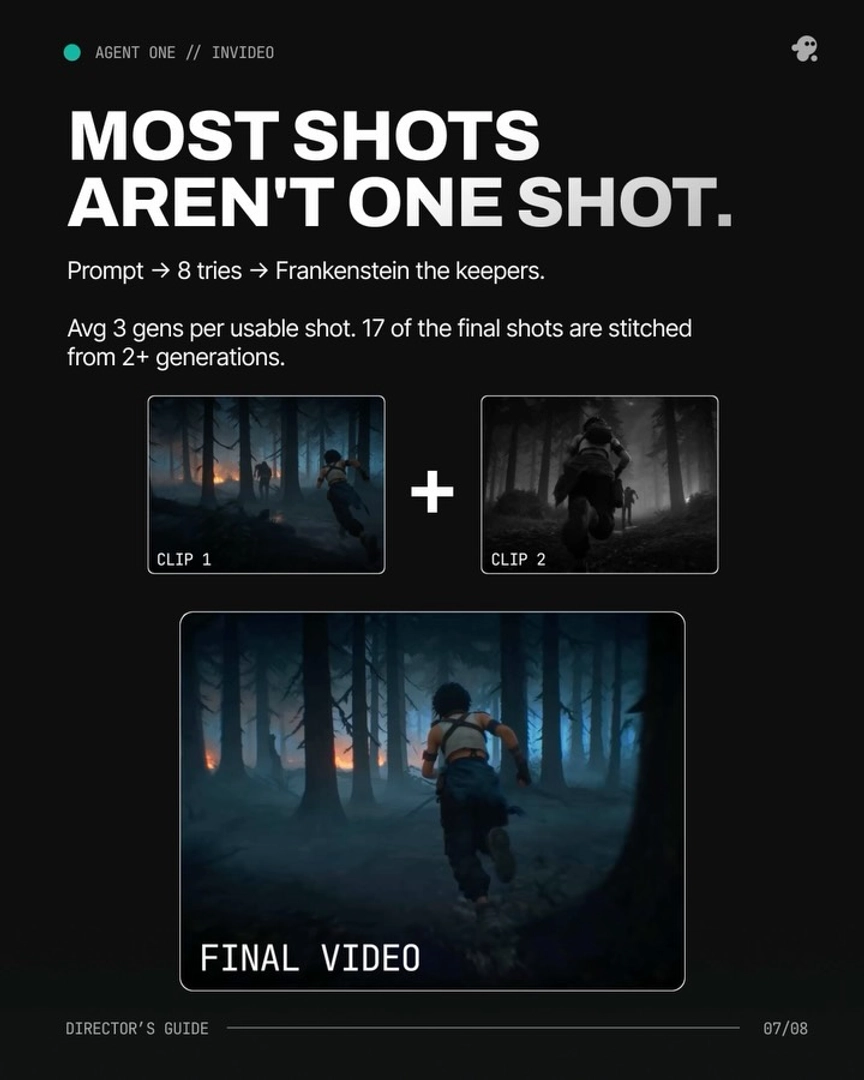
MOST SHOTS AREN'T ONE SHOT. Prompt → 8 tries → Frankenstein the keepers.
— invideo's creative team