A Frankenstein shot is one usable shot assembled by stitching the strongest seconds from two or more separate AI generations of the same prompt. You generate several variants, mark the best moment in each, then cut them together as a single shot — distinct from native multi-shot generation, which connects different shots in one pass.
Use Frankenstein shot assembly when no single generation gives you a complete usable take — the first second is right but the face breaks, the middle is perfect but the camera drifts, the end lands but the start is wrong. Instead of re-rolling endlessly for one clean take, you treat each 15-second generation as a bank of candidate seconds and harvest the keepers.
The workflow is three steps. One, generate variants of the same shot. Across documented productions, an average of 3 generations per usable shot is normal, and each 15-second clip typically contains 4–7 candidate moments — only about 5 seconds of each end up used. Two, mark the best segment in each generation — the second where the performance, lighting, or camera move actually works. Three, stitch the segments into one shot in your editor, matching cuts on motion or action so the seams disappear. As one creative director put it: "Most shots aren't one shot. Prompt → 8 tries → Frankenstein the keepers."
This is an editorial technique, not a generation feature, so it sits downstream of whichever model you used. It is distinct from native multi-shot generation in models like Kling and Seedance 2.0, which produce multiple connected shots from a single prompt in one pass — useful when you want continuity across different angles, not when you're trying to rescue one shot. Inside invideo, the invideo agent routes your prompt to the model that fits the shot (Runway, Veo, Kling, Seedance 2.0), and when a shot still won't land in one go you Frankenstein the best generations together on the timeline.
The scale of this in real productions: in one 3-minute animated episode, 164 clips were generated, 41 made the final cut, and 17 of those final shots — more than 40% — were stitched from two or more generations. That is the honest math of AI video right now: overgeneration is the budget line, and Frankensteining is how you turn a 25% selection rate into a finished film.
Watch some of these to see what works for you:
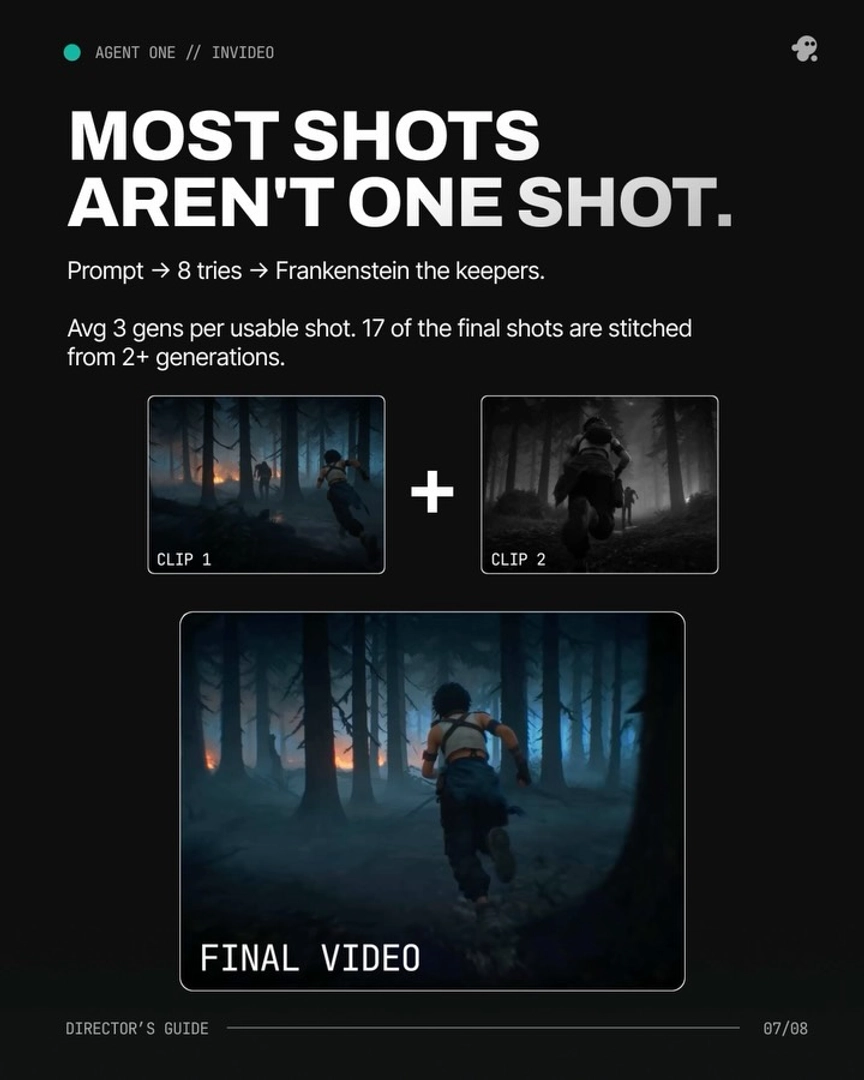
MOST SHOTS AREN'T ONE SHOT. Prompt → 8 tries → Frankenstein the keepers.
— Hridaye, invideo's creative director