Traditional previsualization is expensive because it is skilled specialist labor billed sequentially: every frame is hand-produced, every revision restarts the paid drawing cycle, and every alternate camera treatment means paying to build a second version. Documented costs run from $500–$2,000 for a basic animatic up to $50,000–$100,000 in previz spend on complex sequences.
Costs climb with each rung of fidelity. A traditional animatic — storyboard frames laid on a timeline with a voiceover under them — takes a storyboard artist about a week and $500–$2,000. A full-film boardomatic runs $5,000–$10,000 and takes 2–3 weeks to produce. Full moving previz costs tens of thousands of dollars and takes weeks, and complex sequences have absorbed $50,000–$100,000 in previz spend alone.
Three structural drivers push those numbers up. First, everything is hand labor billed by time: a storyboard artist draws each frame, and a revision or change request restarts that cycle, so notes cost days rather than minutes. Second, the pipeline is sequential — storyboard, then animatic, then animation passes — with each stage waiting on the last, which is why timelines stretch to weeks and labor costs stack stage on stage. Third, exploring alternatives multiplies the bill: seeing a handheld treatment against a dolly treatment traditionally means paying to produce both, so most directors commit to one camera language before ever seeing it in motion.
Productions absorb those costs because the alternative is worse: previz quality is the primary determinant of whether a crew arrives on set aligned or burns shooting days on miscommunication. That risk calculus is what has kept five- and six-figure previz budgets defensible for decades — the spend on previz is insurance against a far larger spend on a shoot that goes sideways.
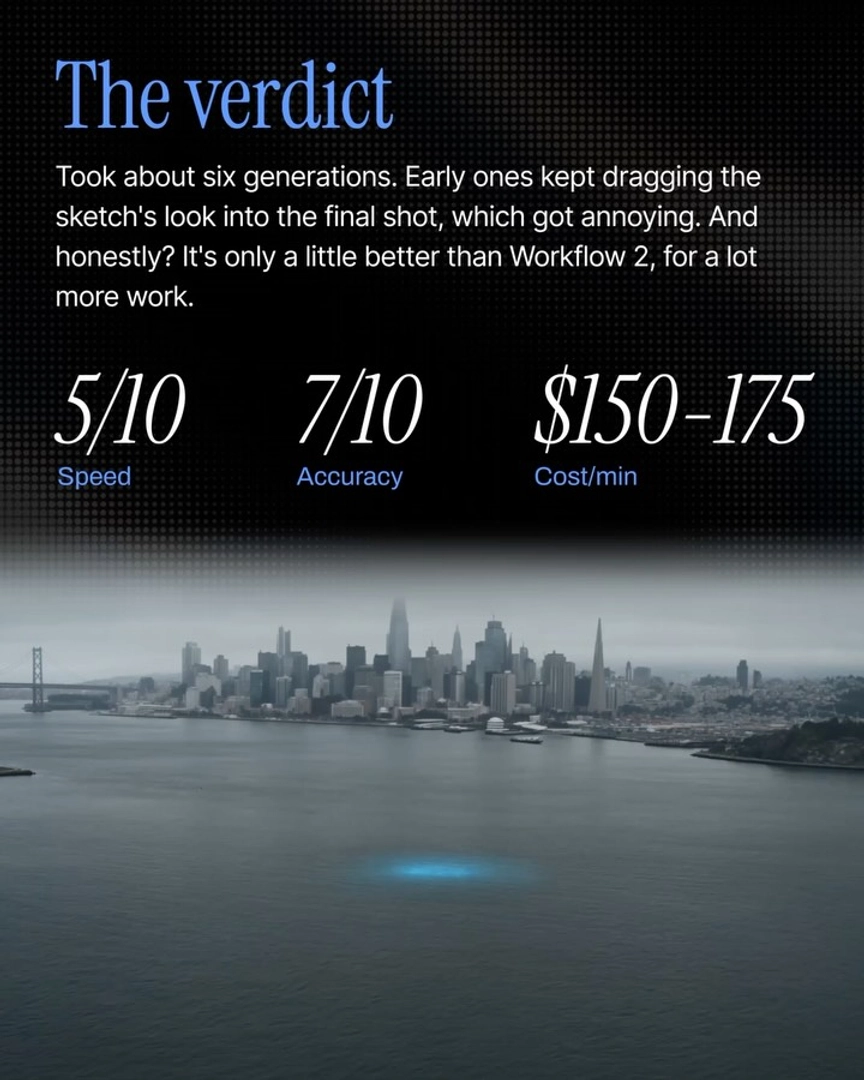
The same deliverables no longer require that budget. invideo is an agentic video creation tool with the current generation models built in, and it compresses each tier: a full animatic assembles on the Slate timeline inside the invideo agent in half a day for under $50, AI previz workflows run roughly $150–$200 per finished minute (with a high-precision exact-camera-movement tier at $1,500–$2,000 per minute for teams that need frame-accurate control), and comparing two camera treatments takes about 20 minutes instead of two paid storyboard passes. The cost drivers above — hand labor, sequential stages, paid alternatives — are exactly the steps that generation removes.
Watch some of these to see what works for you:
A good previz is a difference between a crew moving like a well-oiled machine and one burning through cash, shooting nothing - because everyone's got a different film in their head.
— invideo's creative team