Seedance 2.0 vs Kling 3.0: which AI video model is better for multi-shot storyboard animation?
Last updated July 27, 2026
For multi-shot storyboard animation, pick Kling 3.0 when you need shot-level precision and locked character identity across a sequence — its Custom Storyboard mode takes up to 6 per-shot prompts with duration control, and Omni's Elements UI accepts up to 7 reference images per character. Pick Seedance 2.0 when you're feeding rich visual references and want continuity across segments — its reference-to-video accepts character plates, location plates, and prior clips in one call.
Match the model to what your storyboard actually needs from it. Kling 3.0 is the structured, debuggable choice: Custom Storyboard lets you write a discrete prompt for each panel (up to 6 shots per generation), set per-shot duration, and lock character identity through Omni's Elements UI with up to 7 multi-angle reference images — useful when your storyboard already specifies exact framing, beats, and a recurring character. Smart Storyboard is the lighter mode where Kling auto-divides shots from a single prompt. Seedance 2.0 is the reference-heavy choice: its reference-to-video call accepts up to 9 images, 3 videos, and 3 audio clips, addressable inline with @-tag syntax (@Image1, @Video1), plus first/last-frame guidance for composition control at each shot's boundary. It carries camera movement, framing, and atmosphere across segment boundaries when you feed it the prior clip, which is why it's the stronger pick when you're chaining shots into continuous sequences rather than cutting between discrete panels.
On price and ceilings, the numbers point in opposite directions. Kling 3.0 Pro runs about $0.168/sec with audio on; Seedance standard is around $0.3034/sec and Seedance fast around $0.2419/sec. Kling outputs up to native 4K via its structured API; Seedance is commonly capped at 720p on third-party platforms (1080p only in specific modes). Both cap individual clips at 15 seconds — Kling extends effective narrative length by stitching up to 6 shots in one storyboard call; Seedance extends it by chaining segments through reference-to-video. Hridaye, invideo's creative director, frames why this chaining matters: "Because you're uploading the entire video, Seed Dance seemingly takes some more context from the end of that video to continue the next shot. So even in terms of camera movement, stitching and things like that, it just feels way more seamless compared to the older way of doing the one-take with AI."
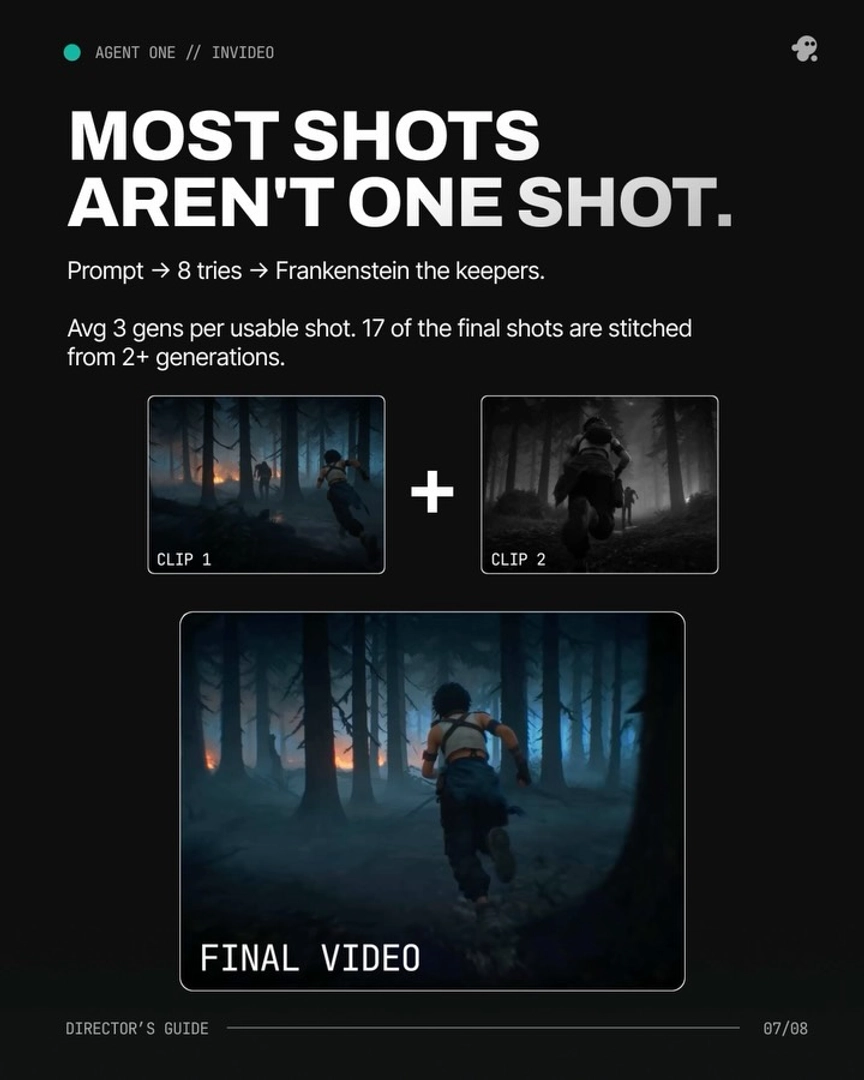
For character consistency across a storyboard, Kling's dedicated Elements/character-lock UI is the cleaner path. Seedance has no dedicated character-lock UI — you solve it with a character sheet plus reference images attached to each generation, which works but is a setup discipline rather than a button. One documented production locked each character in roughly 5 generations at about $9.78 per character using Seedance turnarounds, then ran 164 Seedance 2.0 clips to finish a 3-minute animated episode — average 3 generations per usable shot, with 17 final shots stitched from 2+ generations. That's the real shape of storyboard-to-shot work on Seedance: high reference discipline upfront, multiple gens per panel, editorial selection at the end.
A simple decision tree:
Shot-level precision + character lock across discrete panels → Kling 3.0 Custom Storyboard with Elements references.
Reference-driven shots (style frames, location plates) and/or unified audio-video → Seedance 2.0 reference-to-video with @-tag syntax.
Continuous one-take sequence chained across segments → Seedance 2.0, feeding the prior clip back in as the reference for the next.
invideo is an agentic video creation platform with every current video model — Runway, Veo, Kling 3.0, Seedance 2.0 — available inside one workspace, so you don't pick a platform per model. Inside the invideo agent, your storyboard panels become a shot breakdown the agent routes shot by shot: precision panels and character-locked beats go to Kling, reference-heavy and continuous segments go to Seedance 2.0, and outputs land in the same project. You can also spin up a storyboard agent to sequence panels first, then a DOP agent per scene to direct each shot — useful when different sequences want different model choices. Set the invideo agent to Always Ask mode if you want shot-by-shot approval before credits are spent.
Beyond the model choice: storyboard frames themselves are usually generated upstream (image models like Nano Banana Pro and GPT-Image-2 for panel art and character sheets), then handed to the video model. Whichever model you route to, lock character sheets and environment references before any video generation — that's the step that prevents consistency problems through the rest of the sequence.
Watch some of these to see what works for you:
Because you're uploading the entire video, Seed Dance seemingly takes some more context from the end of that video to continue the next shot. So even in terms of camera movement, stitching and things like that, it just feels way more seamless compared to the older way of doing the one-take with AI.
— Hridaye, invideo's creative director