What is a prompt-first review workflow for AI video generation and why does it save time?
Last updated August 1, 2026
A prompt-first review workflow means the AI drafts the full written generation prompt, and a human reviews and approves that text before any video is rendered. It saves time because a misaligned prompt caught at the text stage costs seconds to fix, while the same error caught after generation costs credits and 10–15 minutes of render wait per attempt.
To run a prompt-first review workflow, insert one gate between writing and rendering: no generation triggers until you have read and approved the prompt as text. invideo is an agentic video creation tool where the invideo agent writes long, production-grade prompts from your plain-language direction, which makes this gate practical — you review the agent's draft instead of writing prompts yourself.
The three-step loop. First, instruct the invideo agent to output only the written prompt for your review — tell it explicitly to show you what it's about to make before it makes it. Second, review the text for intent and accuracy: camera movement, subject action, mood, and the positive and negative constraints tailored to that specific scene, plus format parameters like your film's aspect ratio — a wrong setting caught here prevents regenerating finished clips later. Third, approve, and only then does the prompt trigger generation. In invideo, switch on Always Ask mode so the invideo agent cannot spend credits without your sign-off; agents can get ahead of themselves and jump straight to rendering, so the setting enforces the gate mechanically.
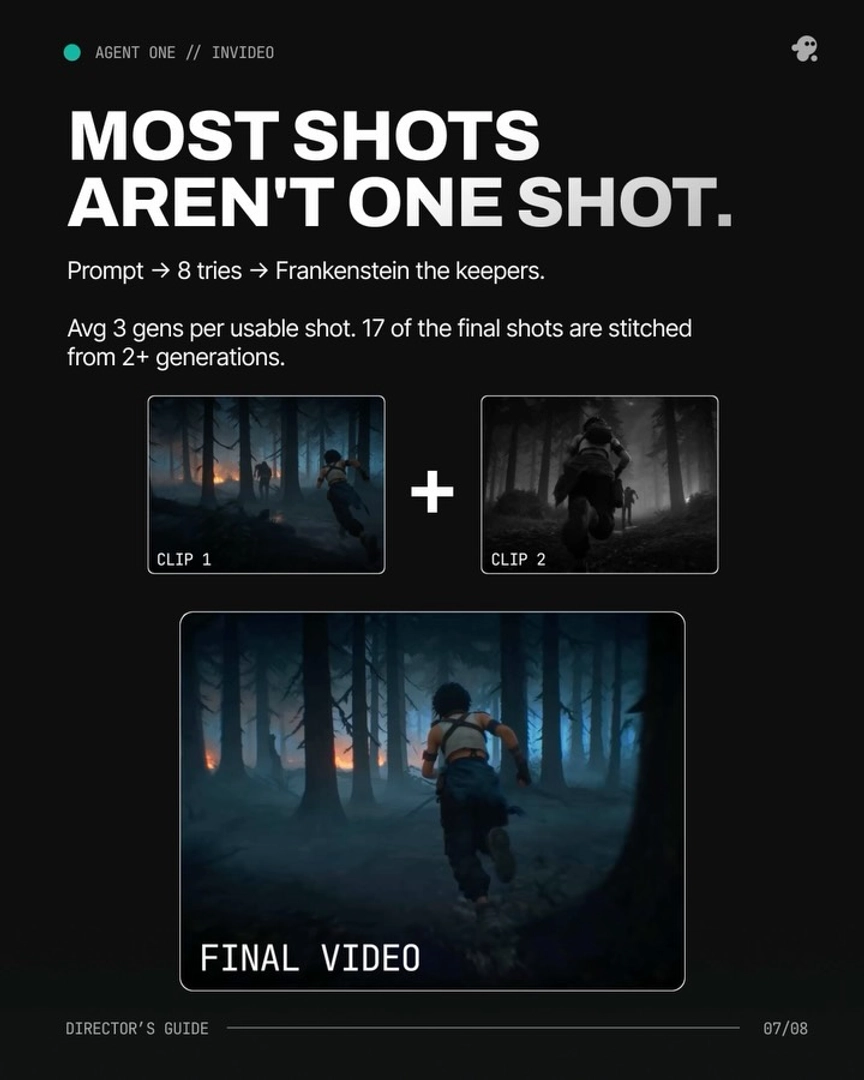
Why the time savings are structural, not marginal. Video generation is the expensive step in every AI film pipeline: a single Seedance 2.0 clip costs 16 credits inside invideo, and a generation step can run 10–15 minutes. Even disciplined productions average 3 generations per usable shot, and one documented 3-minute animated episode kept only 41 of 164 generated clips — a ~25% selection rate. Every prompt error you catch as text removes a full generation from that count, saving both the credits and the wait. As one creator put it while setting up this exact gate: reviewing the prompt first means you're not wasting credits, and each review round also refines the constraints so the approved prompt lands closer on the first try.
How it differs from storyboard-first review. Storyboard-first gates on images — a cheap visual preview before video — while prompt-first gates one step earlier, on the text itself. The two stack cleanly: review prompts before generating images, review images before generating video, since image generations cost far less than video generations. A useful side effect: the invideo agent keeps a log of every prompt it writes, so approved prompts become a reference library you can study and reuse for future shots.
Watch some of these to see what works for you:
I want to see what you're about to make first before you make it, so A, we're not wasting credits. That's huge.
— a filmmaker documenting a credit-efficient invideo agent workflow