What creative elements should you keep the same when adapting a winning ad for a new market?
Last updated August 1, 2026
Keep the edit structure, shot beat sequence, pacing, camera language, music bed, hook mechanic, and product presentation identical — that is where the ad's performance equity lives. Change only the cast, location, voiceover language, on-screen text, and CTA copy. One documented run preserved a 7-beat shot structure and 100% product consistency across Japanese and Spanish versions.
Hold these elements constant when adapting a winning ad for a new market — the edit structure, music bed, and pacing of a winning ad should remain constant across localizations, while only cast, location, voiceover, and UI text change.
Edit structure and clip order. Stitch the localized clips in the exact sequence of the original — documented localizations re-assemble in the same edit order as the source ad, so the rhythm the algorithm and audience responded to survives the adaptation.
Shot beats and composition. Preserve every beat of the original shot list — one documented adaptation carried 7 shot beats unchanged across localized versions. A reliable way to enforce this: have the invideo agent watch the reference ad, identify every cut (it detected 9 in one reference), and extract one frame per scene, then recreate each scene with the new cast and nothing else changed. The working brief is literally "keep everything identical, change only the character and the language."
Pacing, camera language, and energy. Cut rate, camera movement, and framing style are part of what made the ad convert — carry them over shot for shot rather than reinterpreting them for the new market.
Music bed and hook mechanic. Keep the same track structure and the same opening hook device — the first 1.5 seconds is the scroll-stopping window, so the visual mechanic that earned the stop stays; only the language on top of it changes.
Product presentation. The product, its scale, and how characters interact with it must render identically in every version — documented localizations for Japan and Spain held 100% product and text consistency across all three ads tested.
Voice tone and register. Translate the words, not the delivery — in one documented run the agent generated the French voiceover in the same tone as the original, with lip-sync. Each character keeps their own separately locked voice; never share one voice model across characters.
What you deliberately change: the cast (casting someone the market actually sees themselves in matters more than translation), the location, the voiceover language, in-app or on-screen UI text (5 app screens were translated and regenerated per market in one workflow — though keeping UI in English is viable when the app brand is already recognized there), and the CTA copy, adapted culturally rather than word-for-word — one Japanese version ran "up to 45% off on first purchase" as localized on-screen copy.
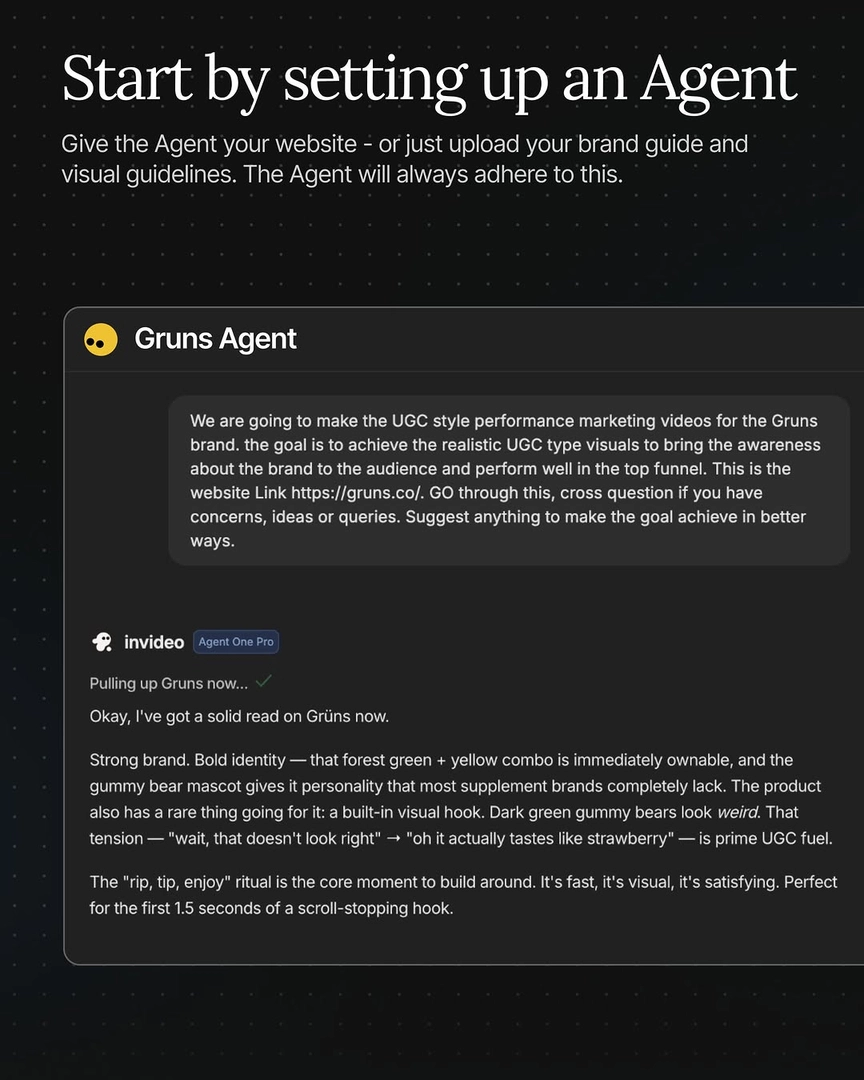
The economics of holding the constants: because structure, pacing, and music carry over, documented localizations ran $70–$150 per finished ad depending on team and approach — one run produced 6 fully localized ads (3 ads × 2 markets) for $425 total at ~2.5 hours each, another logged $145 (570 credits) per localization including an ~85% clip rejection rate. The first market takes roughly 2 hours; each additional market drops to about an hour. Tools like the invideo agent handle the split automatically — upload the winning ad, and it returns a plan of what stays the same and what needs to change before any generation spend.
Watch some of these to see what works for you:
I briefed it like I was talking to my crew: keep everything identical, change only the character and the language. Same camera, same pacing, same energy - new face, new market.
— invideo's creative team, on directing AI ad localization