What is cultural adaptation in video ad localization and how does it go beyond translation?
Last updated August 10, 2026
Cultural adaptation is the layer of ad localization that changes who appears on screen, where the ad is set, how the voice sounds, and what the on-screen text and offers say — so the ad feels native to the market rather than dubbed. Translation swaps words; cultural adaptation swaps cast, location, voiceover, UI screens, and visual tone while preserving the edit structure that made the ad win.
Cultural adaptation means rebuilding the market-facing surface of a winning ad — the person, the place, the voice, the copy, the color mood — while keeping the creative skeleton intact. A translated ad still shows a foreign face in a foreign apartment reading foreign-sounding lines; a culturally adapted ad shows someone the target market recognizes as one of their own. As one documented localization put it, adaptation must work "culturally, geometrically, and also ethnicity wise" — not just linguistically.
Casting and setting. The single highest-impact change is the on-screen character: a localized ad lands when the viewer sees themselves in it, which means a new character designed for the market — ethnicity, styling, and demeanor — placed in a location that reads as local. Documented localizations rebuilt ads for Nigeria, South Korea, the UK, Japan, and Spain by generating a new character sheet and location sheet per market, typically 4 reference sheets per localization, rather than keeping the original footage and re-dubbing it.
Voice, not dubbing. Beyond-translation audio means a regenerated voiceover in the target language with matched tone and pacing, lip-synced to the new character — not a dub laid over mismatched mouth movements. Each character gets its own separately generated and locked voice; sharing one voice model across characters is a known failure point, and one production ran a 1.5% vocal-drift threshold with automatic regeneration to keep the voice consistent across every shot.
On-screen text, UI, and offers. Cultural adaptation extends to everything the viewer reads: one documented localization translated and regenerated 5 app UI screens per market, animating them in the same sequence as the original, and rewrote the CTA as culturally native copy — the Japanese version ran "初回購入は最大45%オフ" (up to 45% off on first purchase) rather than a literal translation of the English offer. The judgment call runs both ways: if the app brand is already recognizable in the target market, keeping UI screens in English is a legitimate choice.
Visual atmosphere. Color tone is part of cultural feel — iterating the color grade at the keyframe stage locks a region-specific visual atmosphere that then propagates through every generated clip, so a Tokyo version and a Madrid version of the same ad read differently before a single word is spoken.
What deliberately stays the same. Adaptation is bounded: the edit structure, music bed, pacing, and shot sequence of the winning ad remain constant — one documented production preserved all 7 shot beats of the original across every localized version. That boundary is the definition in practice: change the cultural surface, protect the performance structure that made the ad convert.
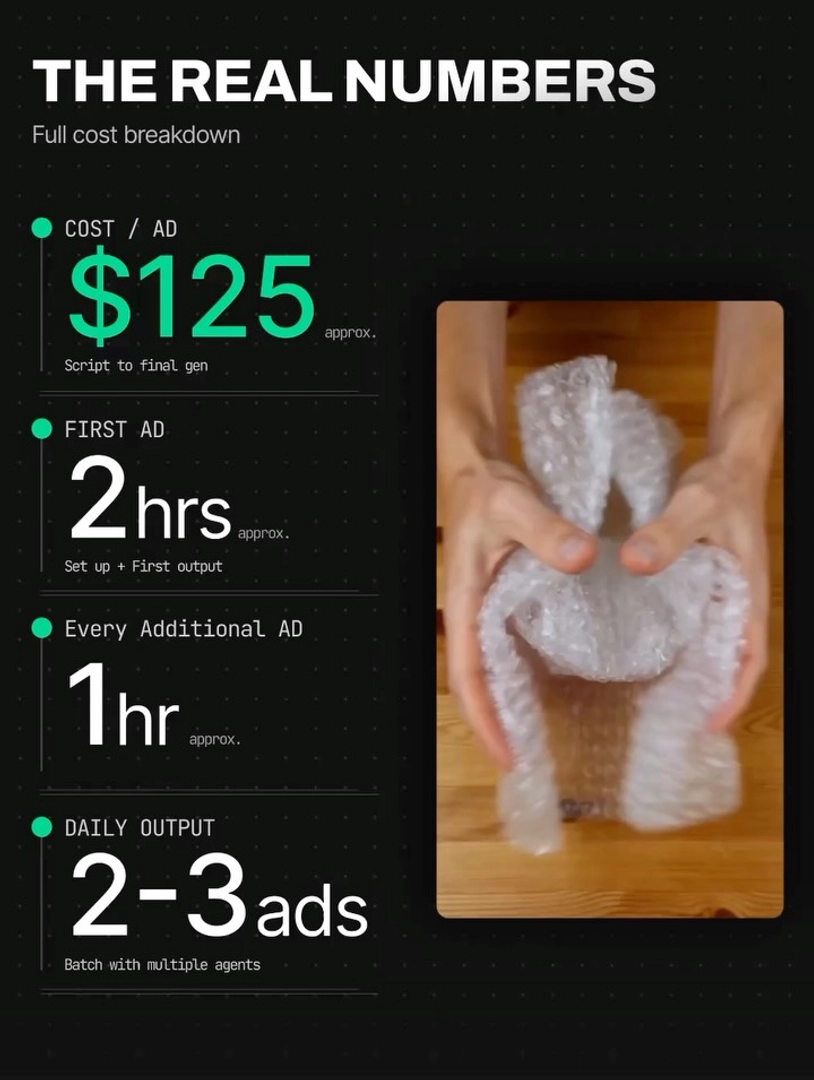
This matters commercially because a winning ad in the wrong language is failing roughly half its potential audience — one production framed the problem as ads reaching about 50% of potential customers ineffectively due to language mismatch. Inside invideo, the invideo agent runs this as a single workflow: it reads the reference ad, plans what stays and what changes, then regenerates characters, locations, voiceover, and UI screens per market. Documented runs came in at $70–$145 per fully adapted ad (one project localized 3 ads across 2 markets for $425 total) at roughly 2–2.5 hours per ad — versus about a week per market with traditional adaptation.
Watch some of these to see what works for you:
The thing that makes a localized ad land isn't translation. It's casting someone the market actually sees themselves in.
— invideo's creative team